 blog
Best UTV for Farm Work and Trails: 2026 Buyer's Guide
Table of Contents
- What Makes a UTV Good for Both Farm Work and Trails
- The Best Side-by-Side for Farm Work: What to Look For
- Utility UTV vs Sport UTV: Which Fits Your Property?
- UTV Towing and Payload Capacity in Real Farm Use
- Choosing a Reliable UTV for Trail Riding
- Ownership Costs, Maintenance, and Seasonal Care
- Buying New vs Used: A Practical Decision Guide
- Conclusion
- Frequently Asked Questions
Last Updated: October 21, 2026
What Makes a UTV Good for Both Farm Work and Trails
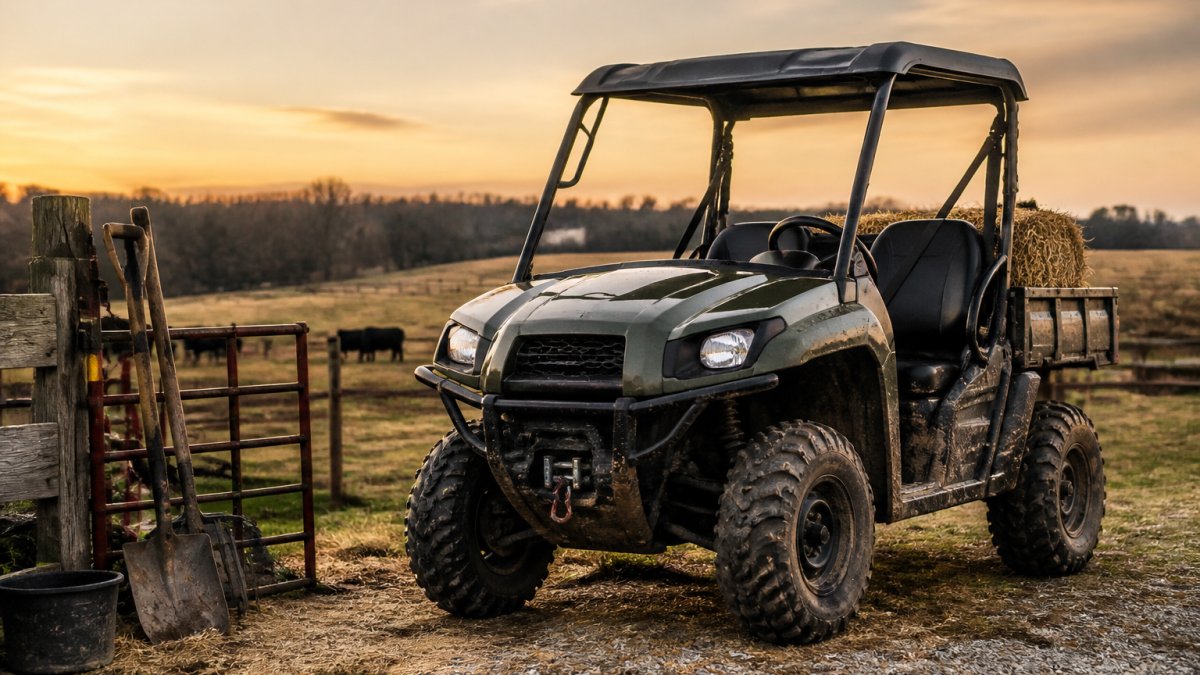
The best UTV for farm work and trails is a utility side-by-side with a dump bed, real towing capacity, four-wheel drive, and suspension soft enough for a full day of riding. Machines built purely for hauling ride harsh; pure sport models can't carry a load.
At Orillia Power Sports Inc, we see this question every week from farmers and property owners who want one machine to do both jobs. That's a fair ask, but it means accepting trade-offs. Here's the framework we use with customers.
The Farm-Work-vs-Trail Scoring Framework
Score any side-by-side on two separate lists, then compare the totals.
Farm work (score each 1-5):
- Cargo bed volume and dump-bed function
- Payload capacity
- Towing capacity
- Ground clearance and four-wheel drive
- Low-range gearing and differential lock
Trail riding (score each 1-5):
- Suspension travel and ride comfort
- Turning radius and maneuverability
- Seating capacity and passenger comfort
- Top speed and engine power
- Aftermarket accessory support
A machine that scores 20+ on both lists is a genuine dual-purpose rig. Anything under 15 on either side is a compromise you'll feel within a season. Most buyers overweight horsepower and underweight the bed. Flip that.
The Best Side-by-Side for Farm Work: What to Look For
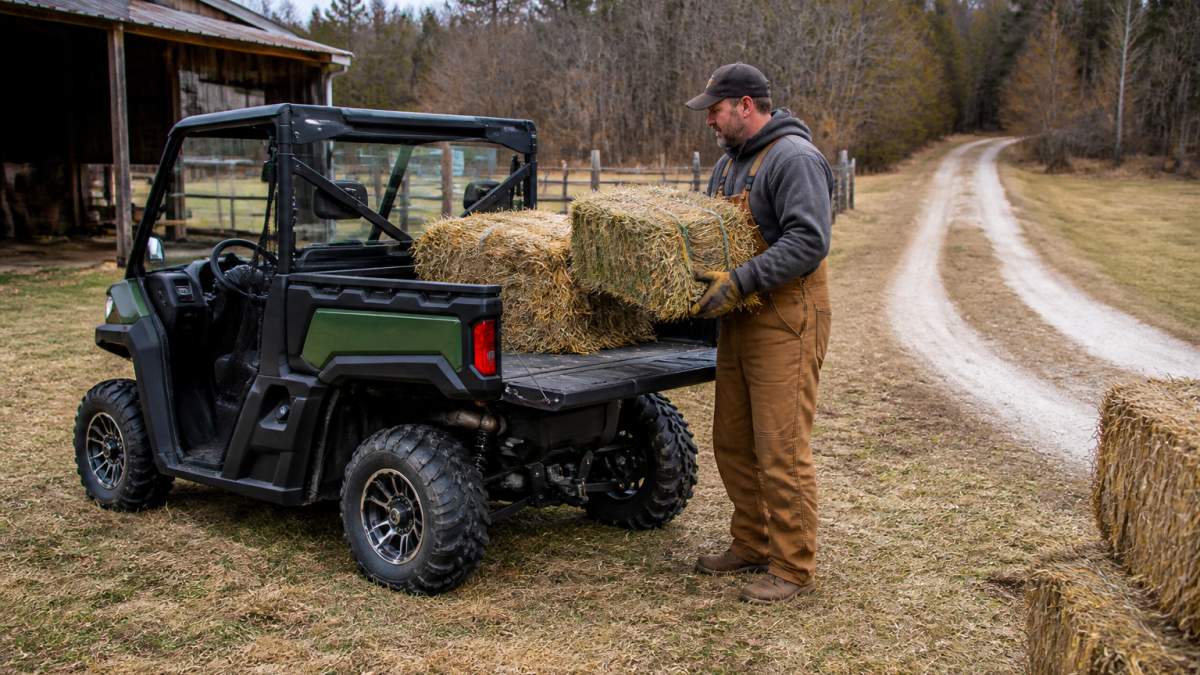
The best side-by-side for farm work prioritizes bed capacity, towing, and drivetrain over speed. Farm chores are repetitive and load-heavy, so the specs that matter are the ones you use every single day.
Cargo Bed, Dump Bed, and Payload Priorities
A manual dump bed saves your back. An electric hydraulic dump bed saves your back and your time, especially when you're spreading gravel, feed, or soil. If you haul loose material regularly, hydraulic is worth the upgrade.
Check payload capacity against what you actually carry: feed bags, fence posts, tools, a sprayer tank. Add it up before you shop. Many buyers find their real-world load is heavier than they assumed.
- Bed volume: measure against your most common load
- Dump mechanism: manual tilt vs. electric hydraulic
- Payload rating: total weight including passengers and accessories
- Bed material: steel vs. composite, and how it handles gravel
Utility UTV vs Sport UTV: Which Fits Your Property?
A utility UTV is built to haul, tow, and work; a sport UTV is built for speed and suspension travel. Utility models win on payload, towing, and bed capacity. Sport models win on ride comfort at speed and handling on aggressive trails.
For most farm owners, utility is the right call. You'll spend more hours moving material than chasing top speed. That said, a utility rig with good suspension and a comfortable seat handles groomed trails well enough for weekend riding.
UTV Towing and Payload Capacity in Real Farm Use
Towing capacity and payload capacity are different numbers, and confusing them is the most common and most expensive mistake farm buyers make. Payload is everything riding on the machine: passengers, cargo in the bed, tools, a sprayer tank, and any accessories bolted on. Towing is what you pull behind it on a hitch. A machine can be well within its tow rating and still be overloaded on payload, or the reverse.
The three numbers that actually matter
- Payload rating: the total weight the chassis, tires, and suspension are rated to carry, including the operator and passenger. Subtract passenger weight first, then see what's left for the bed.
- Bed capacity: the volume and weight the dump bed itself is rated for. Bed weight capacity is usually lower than total payload, so the bed is often the real ceiling.
- Towing capacity: the maximum trailer-plus-load weight, which assumes a properly rated hitch and a tongue weight the machine can handle. Tongue weight counts against payload, not towing.
A common pattern is a buyer who checks the tow rating, buys a trailer that fits it, then loads the bed and a passenger and exceeds payload on the first trip. Add up your real loads before you shop.
Sizing for common farm loads
| Task | What to check | Why it matters |
|---|---|---|
| Hauling feed, seed, or gravel | Payload rating minus passenger weight; bed weight limit; dump mechanism | Repeated heavy loads stress the frame, springs, and bed hinges |
| Pulling a loaded utility trailer | Towing capacity, tongue weight, low-range gearing, brake rating | Protects the clutch and brakes on hills and in mud |
| Winter plowing | Front-end weight capacity, four-wheel drive, ground clearance, tire type | Plow weight and snow load eat into payload fast |
| Spraying or fencing | Bed volume, tie-down points, accessory mounting | Tank slosh and long posts shift load and stress mounts |
| Trail riding with passengers | Seating capacity, payload with two riders, suspension travel | Two adults plus gear can max out a smaller machine |
Leave margin, and know why
Match the tow rating to your heaviest trailer plus its load, then leave headroom. Overloading a side-by-side wears the clutch, brakes, suspension, and tires faster than almost anything else you can do to it, and it makes trail handling unpredictable. On hills and in mud, a machine at its limit has nothing left for traction. If your regular load sits near the rating, step up a class rather than living at the ceiling.
Choosing a Reliable UTV for Trail Riding
A reliable UTV for trail riding shares most of its DNA with a good work machine: proven drivetrain, easy maintenance access, and strong aftermarket support. Reliability comes down to service intervals, parts availability, and how hard the machine works.
Farm-tested models tend to hold up because they're built for continuous duty. Check that filters, belts, and fluids are easy to reach. Ask about parts availability before you buy, not after something breaks.
- Service interval length and access to common wear items
- Belt or shaft drive, and how it handles load
- Dealer and aftermarket parts support
- Warranty coverage and what it excludes
Ownership Costs, Maintenance, and Seasonal Care
Ownership costs go well beyond the purchase price: fuel, tires, belts, fluids, filters, insurance, and storage. Budget for a set of tires and routine service each season, and expect suspension work on older machines. The bigger point is that cost per year depends far more on how you use the machine than on the badge on the hood.
What drives the annual cost
- Tires: the single biggest seasonal line item for a dual-purpose rig. Farm use and trail use wear tires differently, and winter plowing is hardest of all on tread and sidewalls.
- Fluids and filters: engine oil, differential fluid, and air filters on a dusty farm get dirty faster than the manual's interval suggests.
- Belts and clutch wear: towing and heavy bed loads shorten belt life on belt-drive machines.
- Suspension: bushings, shocks, and bearings take a beating on rough trails and washboard farm lanes.
- Insurance and storage: easy to forget, and they vary widely by how and where the machine is kept.
Winter tire and plow prep
Winter is where most of the seasonal cost and most of the preventable damage live. Cold temperatures drop tire pressure, so check and adjust before the first hard freeze and again mid-season. Tread compound stiffens in the cold, and a tire that gripped fine in fall can slide on packed snow. If you plow, the front end carries plow weight plus snow load, which eats into payload and stresses the front tires and suspension.
- Wash the undercarriage after plowing to clear salt and grit before it packs into joints.
- Keep the battery on a maintainer through cold snaps.
- Inspect the plow mount and hydraulic lines before the first storm, not during it.
- Store the machine dry if it sits for weeks, and fog the engine for long storage.
Snowblower and attachment care
If your winter setup includes a snowblower or a plow attachment, service it before the season, not after the first snowfall. Check shear pins, belts, and auger condition, and confirm the attachment mounts and hydraulics match your machine.
For anyone running an older rig, suspension work is the repair that surprises people most on cost. Get an estimate before you commit, and ask what's included.
Buying New vs Used: A Practical Decision Guide
Buying new gets you warranty coverage, current safety features, and a machine with no hidden history. Buying used gets you more capability per dollar, but you inherit someone else's maintenance decisions.
Use this checklist before you commit to either:
- Confirm the machine's rated payload and towing meet your heaviest task
- Check service records and hours on used units
- Inspect tires, belts, and suspension for wear
- Confirm parts and dealer support in your area
- Get a repair estimate for any known issues before purchase
- Verify the machine fits your trailer and storage space
For farm buyers, a well-maintained used utility rig often makes more sense than a new sport model. For trail-focused riders, new warranty coverage is worth the premium.
Conclusion
Choosing one machine for both chores and trails means being honest about which job dominates your week. Start with payload and towing, then add comfort and suspension for the riding you actually do. Our team at Orillia Power Sports Inc can walk you through ATV and UTV options, plus the tire, brake, and suspension service to keep them working year-round. Get started with Orillia Power Sports Inc and find the right side-by-side for your property.
Frequently Asked Questions
What's the best side-by-side for farm work?
The best side-by-side for farm work depends on your tasks, but prioritize a utility UTV with a dump bed, four-wheel drive, differential lock, and enough towing and payload capacity for your equipment. Two-seat models offer more bed space, while crew cabs carry more people but reduce cargo room. Match ground clearance and tire type to your terrain, and confirm the model has strong aftermarket support for accessories like plows and winches. Visit a local dealer to compare models in person before deciding.
Is a utility UTV suitable for trail riding?
Yes, a utility UTV can handle trail riding, though it won't match a sport UTV for speed or suspension travel. Utility models typically have lower top speed, firmer suspension, and heavier weight, but they offer four-wheel drive, ground clearance, and cargo capacity that suit mixed use. If trails are a big part of your plan, look for a utility model with a comfortable suspension setup, adequate ride comfort, and a reasonable turning radius for tighter paths. Test ride one on terrain similar to your local trails.
Should I choose a gas or electric UTV for farm use?
Gas UTVs remain the common choice for farm work because of longer range, quick refueling, and higher towing and payload capability. Electric UTVs suit shorter tasks, quieter operation, and lower routine maintenance, but range and charging time can limit long days in the field. Consider your daily distance, access to charging, and whether you need sustained heavy hauling. For mixed farm and trail use, gas is often more practical, while electric works well for lighter chores and property maintenance.
What features should I look for in a farm UTV?
Focus on a dump bed for unloading, four-wheel drive with differential lock for traction, and towing and payload capacity that match your loads. Ground clearance and tire type matter for mud, snow, and rough fields. Check seating capacity and crew cab options if you carry passengers, and confirm accessory support for plows, winches, and racks. Reliability and dealer service access are equally important, so ask about maintenance intervals and parts availability before you buy.