 blog
blog
Best ATV for Beginners: 7 Models That Actually Fit
Table of Contents
- What Makes an ATV Beginner-Friendly?
- Beginner ATV Comparison: Quick Look
- ATV Size Guide for Adults: Matching Engine and Chassis to Your Skill Level
- 7 Best ATVs for Beginners
- Automatic ATV for Beginners: Why CVT and Drive Belts Matter
- Best ATV for Trail Riding: Handling, Suspension, and Ground Clearance
- ATV Safety Gear for Beginners: What to Wear Before Your First Ride
- New vs. Used and Total Cost of Ownership
- Frequently Asked Questions
Last Updated: October 18, 2026
What Makes an ATV Beginner-Friendly?
The best ATV for beginners is one that matches the rider's size, skill level, and intended use, with predictable power delivery and easy handling. At Orillia Power Sports Inc, we've watched plenty of new riders walk into a showroom and gravitate toward the biggest machine on the floor.
A beginner-friendly ATV prioritizes control over speed. Look for these traits:
- Manageable engine displacement that builds confidence before power
- Automatic transmission (CVT) so you focus on steering, not shifting
- Responsive handling and a stable, predictable suspension
A machine you can control beats a machine that controls you. Below, we break down seven models by use case, plus the sizing, safety, and cost details most guides skip.
Beginner ATV Comparison: Quick Look
Here's how the seven picks map to rider needs and terrain.
| Pick | Best For | Key Trait | Transmission |
|---|---|---|---|
| All-Around Trail | Mixed trail riding | Balanced power and comfort | CVT |
| Automatic Transmission | New riders learning controls | Smooth CVT, no shifting | CVT |
| Utility and Farm Work | Property maintenance | Cargo capacity, torque | CVT |
| Lightweight | Tight trails, smaller adults | Low weight, maneuverability | CVT |
| Youth and Small-Frame | Young or small riders | Speed-limited, low seat height | CVT |
| Value-Focused | Budget-conscious buyers | Low purchase price | CVT |
| 4x4 Traction | Mud, snow, rough ground | Four-wheel drive | CVT |
ATV Size Guide for Adults: Matching Engine and Chassis to Your Skill Level
The right ATV size comes down to two things: engine displacement and physical fit. Get both wrong and a novice rider fights the machine all day.
Engine Displacement for Novice Riders
For adult beginners, a mid-range engine is the sweet spot. Smaller displacements keep throttle response gentle and predictable, which matters more than peak power when you're learning. A common mistake is buying the largest engine you can afford; in practice, a moderate machine teaches better habits and is easier to control on tight trails. Match displacement to your weight and riding conditions, not to a spec-sheet number.
Seat Height, Weight, and Rider Fit
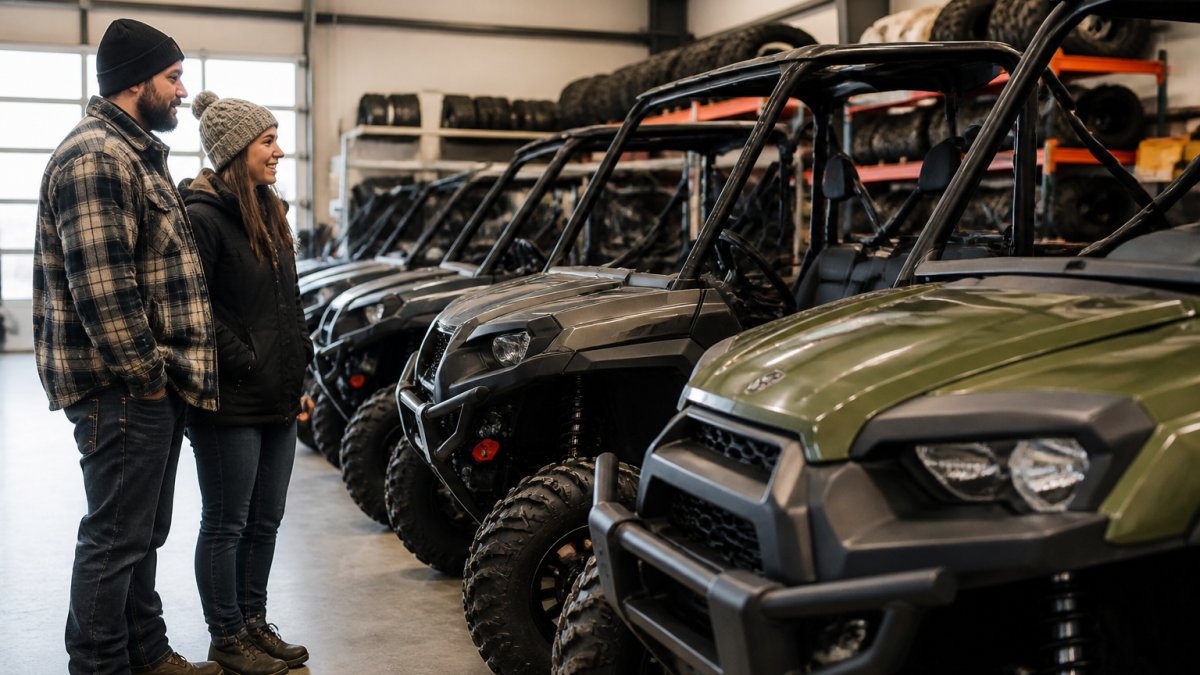
Rider fit is where most buying guides fall short. You should be able to reach the footpegs comfortably and grip the bars without stretching. Seat height, overall weight, and ground clearance all affect how confident you feel. Sit on the machine before you buy. If you're coming from a smaller frame, expect a mid-size chassis to feel substantial at first; that's normal, and it settles within a few rides.
7 Best ATVs for Beginners
Every pick below is a category, not a locked-in spec sheet. Inventory and models change, so confirm current options with our team before you commit.
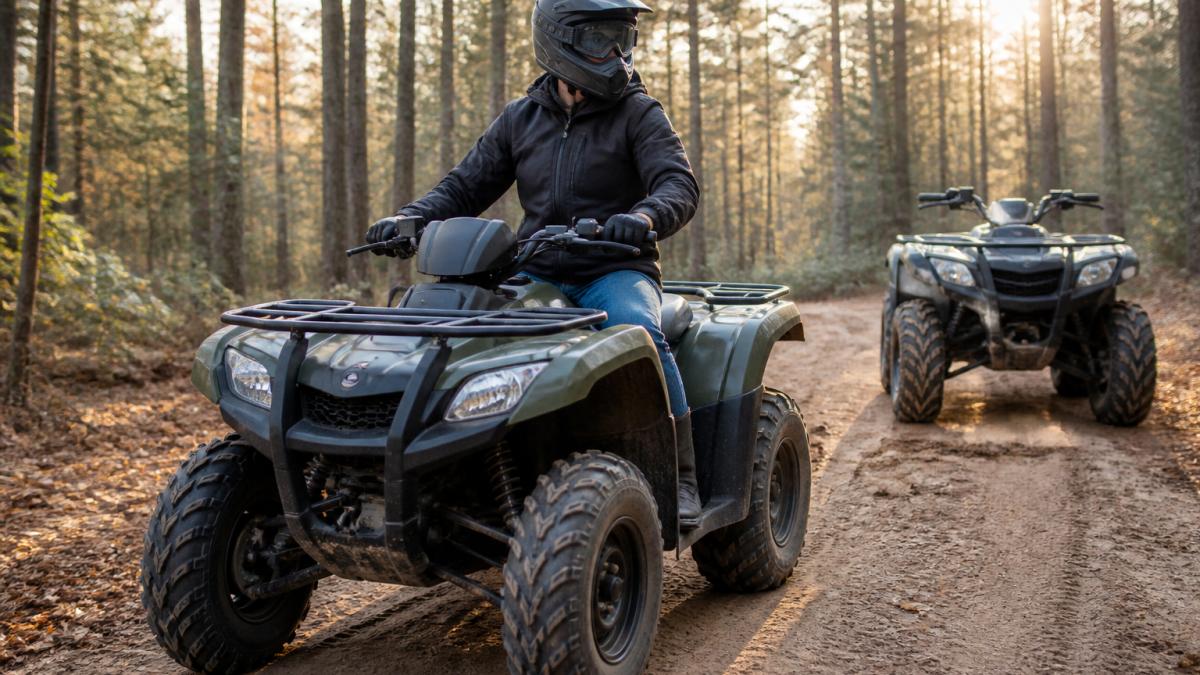
1. The All-Around Trail Pick
The all-around trail pick balances power, comfort, and handling for riders who want one machine for everything. It's the safest default for a novice who isn't sure where they'll ride most. Suspension soaks up roots and rocks, and the seat stays comfortable over a few hours.
Who it suits: a rider of average height and weight who will split time between groomed trails, fire roads, and the occasional rough section. What to check on a test sit: that you can stand on the pegs with a slight knee bend, reach the bars without locking your elbows, and touch the foot brake without lifting your heel. Beginner trade-off: a true all-arounder is heavier than a dedicated lightweight, so low-speed tight turns take more effort in the first few rides.
2. The Automatic Transmission Pick
An automatic ATV for beginners removes the shifting learning curve entirely. A CVT delivers smooth power and lets you keep both hands on the bars and eyes on the trail. For a first-time rider, that's a real safety advantage.
Who it suits: riders who have never operated a clutch or manual gearbox, and anyone riding stop-and-go terrain where constant shifting would distract from steering. What to check: that the belt engagement is smooth from a dead stop and that engine braking on descents feels predictable rather than abrupt. Beginner trade-off: CVT belts wear faster under heavy loads and aggressive throttle, so plan on belt inspection as part of routine service.
3. The Utility and Farm-Work Pick
If your ATV doubles as a workhorse, prioritize torque and cargo capacity. Utility ATVs handle hauling, towing light loads, and property chores. They're heavier, so expect a slower, steadier feel on trails.
Who it suits: property owners who need to move firewood, tow a small trailer, or run a plow in winter. What to check: that the machine has mounting points for the attachments you actually plan to use, and that the seat height still lets you mount and dismount confidently with work boots on. Beginner trade-off: utility machines are the least nimble on tight trails, so if 80% of your riding is technical single-track, this is the wrong category.
4. The Lightweight and Maneuverable Pick
Lighter machines are easier to steer, load, and recover if you get stuck. For smaller adults or tight, technical trails, a lightweight ATV offers maneuverability that heavier utility models can't match.
Who it suits: smaller-framed adults, riders who trailer their machine frequently, and anyone whose local trails are tight and twisty. What to check: that you can physically lift the rear of the machine enough to reposition it, and that the turning radius lets you complete a U-turn on the trail width you ride. Beginner trade-off: light machines transmit more trail feedback, so rough ground feels harsher than it would on a heavier chassis.
5. The Youth and Small-Frame Pick
Youth ATVs are built for young or small riders, with lower seat heights and speed-limiting features. Parents should match the machine to the child's size and supervise closely. Our team can help you pick a frame that fits now without outgrowing it in a season.
Who it suits: young riders and small-framed adults who cannot safely reach the controls of a full-size machine. What to check: that the child can reach both hand levers and the foot brake while seated, that the speed limiter is adjustable, and that the machine's recommended rider age and weight match the child. Beginner trade-off: youth machines are outgrown quickly, so buy for fit and safety first and plan the upgrade path rather than buying the largest youth model available.
6. The Value-Focused Pick
Entry-level ATVs keep purchase price down without sacrificing the basics. You give up some refinement, but for a first machine, value-focused models are a smart way to learn before upgrading.
Who it suits: first-time buyers who want to confirm they'll actually use an ATV before committing to a premium machine. What to check: that the basics are present, CVT, working four-wheel drive if you need it, and a service network that can maintain it. Beginner trade-off: entry models often use simpler suspension and fewer accessories, so comfort on long rides and attachment options are more limited.
7. The 4x4 Traction Pick
Four-wheel drive transforms traction on mud, snow, and loose ground. For riders facing varied conditions, a 4x4 ATV is worth the extra weight. It's the pick we'd suggest for anyone riding year-round.
Who it suits: riders in snow-belt regions, anyone riding wet or loose terrain, and property owners who plow in winter. What to check: that you understand when to engage and disengage four-wheel drive, and that the machine's tires are suited to the surfaces you ride most. Beginner trade-off: four-wheel drive adds weight and mechanical complexity, and it does not replace good tires or rider skill, traction still starts at the contact patch.
Automatic ATV for Beginners: Why CVT and Drive Belts Matter
A CVT, or continuously variable transmission, uses a drive belt to deliver seamless power without manual shifting. For beginners, that means fewer things to think about and smoother throttle response.
Drive belts do wear, especially with aggressive riding or heavy loads. Knowing your belt's condition is part of routine maintenance, and a worn belt can leave you stranded on the trail.
Best ATV for Trail Riding: Handling, Suspension, and Ground Clearance
The best ATV for trail riding delivers responsive handling, compliant suspension, and enough ground clearance to clear obstacles. Trail conditions vary, so a machine that feels planted and predictable matters more than raw speed.
Look for suspension travel that absorbs bumps without bottoming out, and ground clearance that keeps the chassis off rocks and roots. Weight affects maneuverability on tight trails; lighter machines turn in faster.
ATV Safety Gear for Beginners: What to Wear Before Your First Ride
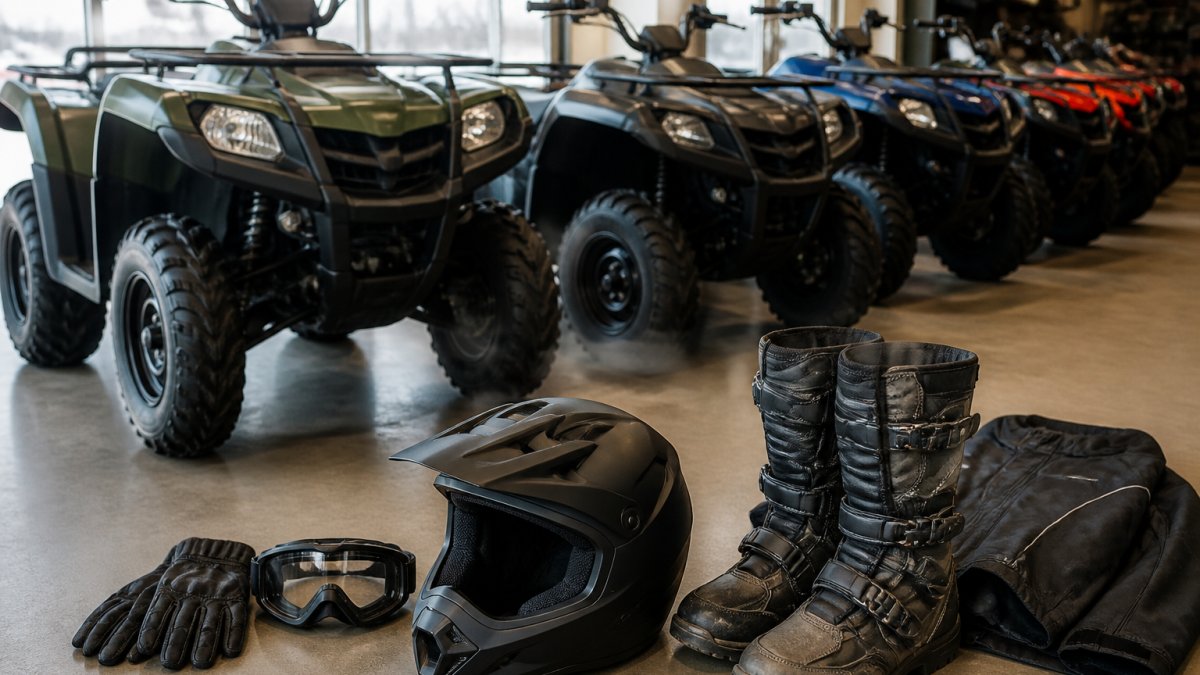
Proper ATV safety gear is non-negotiable. Before your first ride, gear up with:
- A certified helmet that fits snugly and fastens securely
- Eye protection or a helmet visor in good condition
- Gloves for grip and hand protection
Fit matters as much as the gear itself. A loose helmet will shift in a tip-over, and boots that are too stiff make it hard to feel the foot brake. Try gear on with the same layers you'll ride in.
A Beginner Training Roadmap
Training matters as much as gear. A hands-on safety course teaches throttle control, body positioning, and trail etiquette. Check with local rider organizations for beginner courses, and always ride within your skill level. Speed and terrain should match your experience, not your ambition.
A practical progression most instructors recommend:
- Read the owner's manual and learn the location of every control before you start the engine.
- Practice in a flat, open area with no obstacles, a field or empty lot, before hitting a trail.
- Master low-speed control drills: figure-eights, controlled stops, and slow-speed turns using body weight and handlebar input.
- Learn hill technique on a gentle slope: weight forward on climbs, weight back on descents, and never turn sharply on a hill.
- Ride with a more experienced partner for your first several trail outings, and stay within sight of each other.
Fit and Test-Ride Checklist
Before you commit to any machine, run through this checklist on the showroom floor and, if possible, in a low-speed test area:
- Seat height: you can mount and dismount confidently with boots on.
- Reach: you can grip the bars without stretching and reach both hand levers and the foot brake while seated.
- Standing position: you can stand on the pegs with a slight knee bend and the bars still within comfortable reach.
New vs. Used and Total Cost of Ownership
A new ATV gives you a warranty, known service history, and the latest safety features. A used ATV costs less upfront but carries risk: hidden wear, uncertain maintenance, and no warranty coverage.
Beyond purchase price, budget for total cost of ownership:
- Routine maintenance and drive belt service
- Tires, which wear faster on rough terrain
- Insurance and registration where required
For a first machine, a new entry-level ATV often makes more sense because you start with a clean service history. If you buy used, have a qualified technician inspect it first.
Frequently Asked Questions
What size ATV should I get as a beginner?
For most adult beginners, a mid-size machine in the 300cc to 450cc range is a sensible starting point. It offers enough power for trail riding and light property work without the throttle response that catches new riders off guard. Smaller adults and teens may prefer 250cc, while larger riders or those carrying cargo can look at 500cc. Sit on several models and check seat height and weight before deciding, since fit matters as much as engine size.
Are automatic ATVs easier for beginners to ride?
Yes. An automatic ATV removes clutch and shift timing from the equation, so you can focus on steering, braking, and reading the trail. Most automatic models use a CVT with a drive belt, which delivers smooth power and requires only routine belt inspection. That said, automatic does not mean maintenance-free: keep the belt clean and check it for wear, especially after muddy rides. For a first ATV, automatic is the lower-stress choice.
Should a beginner choose a 2WD or 4WD ATV?
Four-wheel drive adds traction on loose gravel, snow, and muddy trails, which builds confidence for new riders. It also helps with resale value and utility work. Two-wheel drive is lighter, simpler, and often less expensive, and it can suit flat, dry trail riding. If you plan to ride in variable conditions or use the ATV for property chores, 4x4 is the more versatile pick. Match the drivetrain to where you will actually ride.
What safety gear do you need to ride an ATV?
At minimum, wear a certified helmet, eye protection, gloves, long pants, a long-sleeved shirt or riding jacket, and over-the-ankle boots. A chest protector and knee guards add protection for trail riding. Check that your helmet fits snugly and is not cracked or expired. Many jurisdictions require helmets for riders and passengers, so confirm local rules before heading out. Gear is not optional equipment; budget for it alongside the ATV itself.
Choosing your first ATV shouldn't feel like a gamble. The right machine matches your size, your terrain, and your experience, and it comes with a team that stands behind it. Orillia Power Sports Inc carries a full lineup of ATVs, UTVs, and dirt bikes for all ages, backed by a full-service shop for maintenance and repairs. Visit us to sit on the machines, ask questions, and get started with a first ATV that fits you from day one.