 how-to
How to Choose the Right UTV: A 2026 Buying Guide
Table of Contents
- Start With the Job: How to Choose the Right UTV for Your Actual Needs
- Best UTV for Work: Matching Capability to the Tasks You Do
- Best UTV for Trail Riding: Terrain, Handling, and Comfort
- UTV Size and Seating Capacity: Fitting the Machine to Your People and Property
- New vs. Used UTV: What Changes in Your Budget and Risk
- Total Cost of Ownership: What the Sticker Doesn't Show
- Test Ride and Inspection Checklist: What to Check Before You Commit
- Conclusion: Choosing With Confidence
- Frequently Asked Questions
Last Updated: October 14, 2026
Start With the Job: How to Choose the Right UTV for Your Actual Needs
The fastest way to choose the right UTV is to name the job it will do most often, then buy for that job and not for the brochure.
A UTV, also called a side-by-side or SxS, is a four-wheeled off-road vehicle with a steering wheel, bench or bucket seating, and a cargo bed.
So start with one question: what will this vehicle actually do?
Work, Recreation, or Both: Defining Your Primary Use
Most buyers land in one of three camps. Knowing yours narrows the field fast.
- Work use: hauling wood, feed, tools, or snow. You need payload, towing, and a dump bed.
- Recreational riding: trail days with family or friends. You want comfort, suspension travel, and easy handling.
- Both: a utility model with decent trail manners. This is the most common choice, and the hardest to get right.
Write down your top three tasks before you shop. Bring that list to the dealership. It keeps you honest when a salesperson points you toward something bigger and pricier than you need.
Best UTV for Work: Matching Capability to the Tasks You Do
The best UTV for work is the one that carries your heaviest regular load without straining, and fits where you actually drive it.
Here's how to think about each:
- Cargo capacity: match it to your typical load, not your biggest-ever load. A bed that dumps saves your back.
- Towing capacity: matters if you pull trailers, spreaders, or logs. Check the rating, not the sales pitch.
- Ground clearance: low clearance catches on ruts and snow-packed lanes.
- Four-wheel drive: non-negotiable for mud, hills, and winter work.
For winter property maintenance, a plow setup changes the math. A heavier utility model pushes snow better, but you'll want to confirm the machine's plow mounting and front suspension can handle it. Ask about that before you sign.
Best UTV for Trail Riding: Terrain, Handling, and Comfort
The best UTV for trail riding puts suspension and handling ahead of raw power. Trail conditions vary wildly: mud, rocky terrain, hills, and tight wooded sections all demand different strengths.
What to weigh:
- Suspension: more travel soaks up bumps and reduces fatigue on long rides.
- Maneuverability: a shorter wheelbase turns tighter on wooded trails.
- Comfort: seats, legroom, and wind protection matter over a full day.
- Noise and heat: some machines run hot and loud in the cab. Sit in one before you buy.
Sport riding and recreational riding pull buyers toward different machines. A sport-tuned side-by-side is quick and sharp but offers little cargo space. A recreational model trades some speed for comfort and storage.
UTV Size and Seating Capacity: Fitting the Machine to Your People and Property
UTV size and seating capacity should be decided before engine power, because the machine has to fit your people and your property first. Passenger capacity ranges from two-seat models up to six-seat crew cabs, and each step up adds length and weight.
Ask yourself:
- How many people ride most often? Buying for the once-a-year group ride is a costly habit.
- Do you need a bench seat or bucket seats? Buckets hold you better on rough ground.
- Will kids ride along? Look for seat belts and a proper roll cage on every seat.
More seats mean a longer wheelbase. That's more stability, but a wider turning circle and a tougher time in tight spots.
Fit and Access Constraints: Gates, Trailer Width, and Storage
Measure before you buy. This is the step buyers skip, and it's the one that causes the most regret.
- Gate and doorway width: a crew cab may not clear your fence line.
- Trailer width: your existing trailer has to carry it. Check the deck, not just the rating.
- Storage: a side-by-side takes real space in a garage or shed. Measure the door height too.
If your access is tight, a narrower two-seat utility model often beats a bigger machine you can't park or tow.
New vs. Used UTV: What Changes in Your Budget and Risk
New vs. used UTV comes down to warranty versus price, and how much risk you're willing to carry. A new machine gives you a full warranty, current safety features, and no unknown history. A used machine costs less up front but puts inspection squarely on you.
| Factor | New UTV | Used UTV |
|---|---|---|
| Upfront cost | Higher | Lower |
| Warranty | Full coverage from the manufacturer | Usually expired or non-transferable |
| Maintenance history | Known, dealer-documented | Often unclear or verbal only |
| Latest safety features | Included | May be missing |
| Depreciation risk | You absorb the steepest years | Already absorbed by the first owner |
| Financing | Often promotional rates through the dealer | Typically personal loan or cash |
| Winter readiness | Fresh tires, plow-ready | Tires and plow mounts may need replacement |
What Actually Changes With a Used Machine
A used UTV can be the smarter buy, but only if you verify four things:
- Hours, not just kilometers. Hour meters tell you more about engine and drivetrain wear than odometer readings on a machine that idles while plowing or running a sprayer.
- Warranty transferability. Some manufacturer warranties transfer to a second owner; many do not. Ask for the original warranty document, not a verbal promise.
- Service records. Look for oil and filter intervals, belt replacements, and any suspension or drivetrain work. A seller who cannot produce records is a risk, not a bargain.
- Recall status. Check the manufacturer's recall lookup using the VIN before you commit. Open recalls are the seller's problem to fix, not yours.
Financing and Insurance Realities
New machines are often financed through the dealer with promotional rates, which can make the monthly payment look smaller than a used machine bought on a personal loan. Run both numbers over the full term, not just the monthly figure. Insurance premiums also differ: a new machine with full coverage costs more to insure than a used machine carrying liability only, but the used machine leaves you absorbing repair costs yourself.
A Simple Decision Rule
Buy new if you want warranty coverage, current safety features, and a known history, and you plan to keep the machine for years. Buy used if you can inspect it properly, verify service records, and accept that some repair risk is now yours. Either way, budget for a set of winter tires and a pre-season service before the first snowfall.
Total Cost of Ownership: What the Sticker Doesn't Show
Purchase price is only the first bill. Total cost of ownership includes fuel, tires, servicing, insurance, and repairs, and it adds up faster than most buyers expect. The gap most buyers miss is that a UTV's real cost is driven by how you use it, not by what you paid for it.
The Cost Drivers That Actually Move the Number
- Fuel. Bigger engines and heavy work burn more. A machine that spends its life plowing or hauling will drink noticeably more than one that sees occasional trail rides.
- Tires. Off-road tires wear with hard use, and winter traction matters. A dedicated set of winter tires for snow and ice plowing preserves your summer tires and improves control on packed snow. Factor in mounting and balancing each season.
- Servicing. Oil, filters, belts, and brake work on a set schedule. Belt replacement is the most commonly overlooked interval on belt-driven machines.
- Repairs. Suspension and drivetrain work is the priciest common job. A worn set of shocks or a failing CV joint can cost more than a year of routine servicing.
- Plow and snowblower accessories. A plow setup adds up-front cost and puts extra load on the front suspension, tires, and charging system. Snowblowers for walk-behind or tractor use are a separate purchase entirely.
- Storage and insurance. Easy to forget, hard to avoid. Indoor storage protects tires and plastics from UV and freeze-thaw damage.
A Three-Year Comparison Framework
To compare two machines fairly, estimate these over three years:
- Purchase price or financed total
- Fuel used per season based on your typical tasks
- One set of replacement tires, plus winter tires if you plow
- Scheduled servicing at the manufacturer's intervals
- One realistic repair allowance for wear items
- Insurance and storage
A cheaper machine with a poor service record can cost more over three years than a well-maintained one. Ask for service history on any used unit, and price the tires and plow mount before you commit.
Test Ride and Inspection Checklist: What to Check Before You Commit
Always test ride before you commit, and inspect the machine the same way a mechanic would. A short drive on flat ground tells you almost nothing. Push it a little.
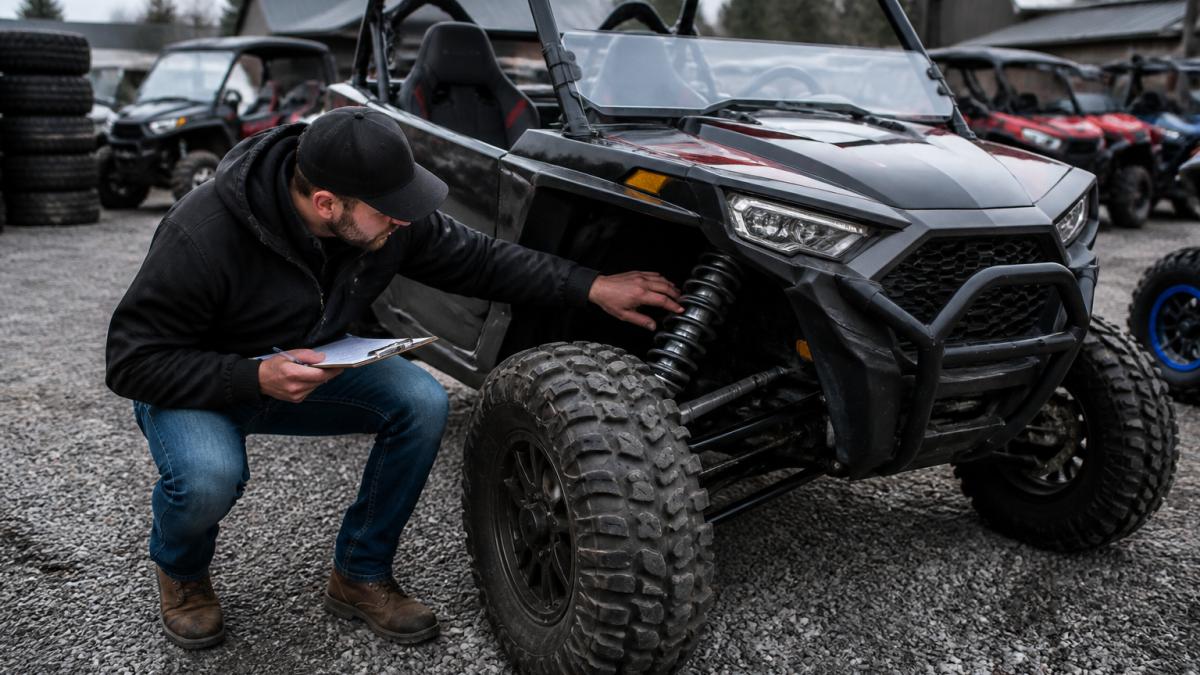
Run through this list on every machine:
- Start it cold. Listen for rattles or hard starting.
- Drive on uneven ground, not just pavement.
- Test four-wheel drive engagement.
- Check tire tread and look for uneven wear.
- Bounce each corner to feel the suspension.
- Inspect the cargo bed and dump mechanism.
- Check seat belts, roll cage, and windshield.
For used units, ask who serviced it and whether records exist. A seller who can't answer that is a risk.
Conclusion: Choosing With Confidence
The real challenge isn't picking a machine. It's picking the one that fits your work, your people, and your property without overspending.
At Orillia Power Sports Inc, we stock a full line of ATVs, UTVs, and dirt bikes for all ages, plus a full automotive repair shop for cars and trucks, including tires, brakes, and suspension work.
Get started with Orillia Power Sports Inc and find the UTV that fits your land, your loads, and your budget.
Frequently Asked Questions
How do I choose the right size UTV?
Start with where you will park it and how you will move it. Measure your garage door, trailer deck, and any gates or trails you plan to use. Then count the people and cargo you carry on a typical trip. A two-seat utility model suits solo work and tight trails, while a three- or six-seat machine fits families and crews. If you are unsure, sit in both sizes at a dealer before you decide.
What should I look for when buying a used UTV?
Ask for the maintenance history and check the hours on the odometer. Inspect the frame for cracks or welds, look at the condition of the CV boots, and test the four-wheel drive engagement. Check tire wear for uneven patterns, which can signal suspension or alignment issues. A used UTV that has been serviced regularly at a shop with records is a safer bet than one with no history.
How much horsepower do I need in a UTV?
Match power to your workload, not to a spec sheet. For light property maintenance, hauling, and moderate trails, a mid-range engine is usually enough. If you regularly tow heavy loads, climb steep grades, or ride at higher elevations, more power helps. Test ride a few models in your actual conditions. A machine that feels underpowered on a test loop will feel worse when loaded.
What features matter most when choosing a UTV for work?
Cargo bed capacity, towing capability, and four-wheel drive are the core work features. Look for a bed that can dump or tilt if you move soil or gravel. Ground clearance and skid plates protect the underside on rough ground. A roof and a windshield extend the working season. If you run a plow in winter, confirm the machine has the mounting points and power steering for the job.