 ultimate-guide
The Essential ATV Buying Guide for New Riders
Last Updated: October 25, 2026
Quick Summary
ATV buying starts with matching the machine to your real riding: trail riding rewards a narrow, agile quad, farm work rewards torque, racks, and a hitch, and recreation sits in between. Utility ATVs suit Canadian riders who want one machine for trails, hunting access, and winter plowing. Confirm fit with a test sit before you commit.
- A utility ATV brings four-wheel drive, low-range gearing, racks, and a hitch for carrying and towing.
- Youth and entry machines are typically under 250 cc and governed for new riders.
- A mid-size utility in the 400-600 cc range covers trail riding, light towing, and plowing for most households.
- If winter use is on the list, four-wheel drive and a plow mount should be non-negotiable.
- Buy new for predictable costs and a full warranty; buy used only if you can inspect carefully and budget for repairs.
Table of Contents
- Start With Intended Use: How You'll Ride Decides the ATV
- Utility ATV vs Sport ATV: Which Category Fits Your Riding?
- ATV Size Guide: Match Engine Displacement and Physical Fit to the Rider
- New vs Used: Weighing Upfront Cost Against Ownership Risk
- The Used ATV Inspection Checklist: What to Check Before You Pay
- Your ATV Buying Checklist: Features, Paperwork, and Budget
- Book a Showroom Visit and Test Sit at Orillia Power Sports Inc
- Frequently Asked Questions
Start With Intended Use: How You'll Ride Decides the ATV
The most useful advice for any ATV buying guide: pick the machine around the riding, not the other way around. A quad bought for the wrong job is an expensive mistake, and it's the one we see most often at Orillia Power Sports Inc.
ATV buying starts with one honest question: what will this machine actually do on a normal Saturday?
Trail Riding, Farm Work, and Recreation: Three Different Machines
Trail riding rewards a narrow, agile machine with compliant suspension and a comfortable seat. Farm work rewards torque, cargo racks, and a hitch. Recreation sits in between: fire-road cruising, ice fishing access, and family rides where comfort matters more than lap times.
Write down your real split before you shop. If 80 percent of your riding is hauling firewood and plowing a driveway, a sport quad will disappoint you every weekend.
Utility ATV vs Sport ATV: Which Category Fits Your Riding?
A utility ATV is built to carry and tow, while a sport ATV is built to go fast and handle aggressively. Utility models bring four-wheel drive, low-range gearing, racks, and a hitch.
The trade-off cuts both ways. A utility quad feels heavy and slow on tight trails. A sport quad is useless with a plow and miserable in deep mud.
| Category | Best For | Strengths | Weaknesses |
|---|---|---|---|
| Utility ATV | Farm work, plowing, towing, hunting | Four-wheel drive, racks, hitch, low range | Heavy, slower on tight trails |
| Sport ATV | Fast trail riding, dunes, play | Agile, strong suspension, quick throttle | No cargo capacity, poor in mud |
| Recreation ATV | Family rides, fire roads, mixed use | Comfortable, manageable power, versatile | Master of none |
| Youth ATV | Riders learning the basics | Smaller size, governed speed, lighter weight | Limited to young or novice riders |
ATV Size Guide: Match Engine Displacement and Physical Fit to the Rider
The right ATV size guide answers two questions: how much engine does the rider need, and does the machine physically fit them? Displacement and seat height matter more than any spec sheet headline.
Engine Size by Experience Level
New riders do best on smaller-displacement machines, where the throttle is forgiving and the weight is manageable. If you are sizing up a first machine, our rundown of beginner-friendly ATV models matches engine size to experience level.
Frame displacement by the job. A youth or entry machine is typically under 250 cc and governed for new riders. A mid-size utility in the 400-600 cc range covers trail riding, light towing, and plowing for most households.
Physical Fit: Seat Height, Reach, and Ground Clearance
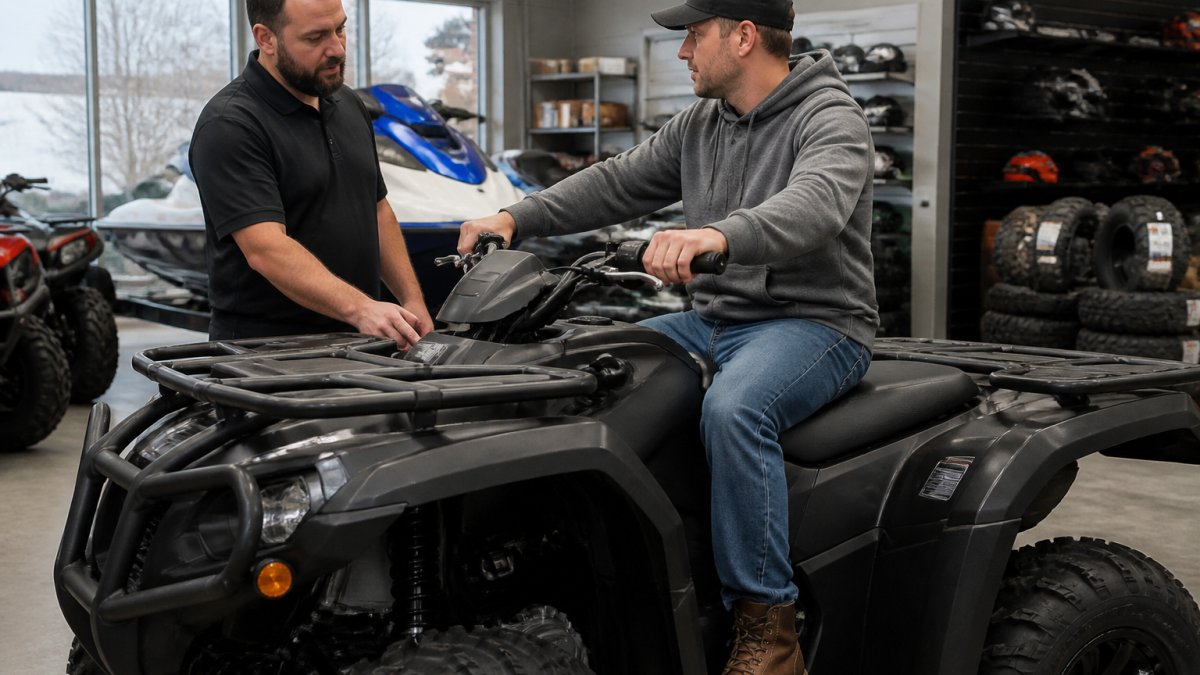
Fit is where showroom visits earn their keep. Ground clearance decides what the machine can cross without dragging its belly; seat height decides whether a rider can mount confidently and shift weight on off-camber ground.
Translate those general points into checks you can run in the showroom:
- Seat height and stand-over: With the machine on level ground, the rider should be able to straddle the seat with both feet flat or nearly flat. If the rider has to slide off the seat to touch the ground, the machine is too tall for confident low-speed control.
- Reach to controls: Hands should fall on the handlebars without locking the elbows, and the rider should be able to work the brake lever and throttle through their full range without shifting their grip.
- Footpeg and shifter reach: The rider should reach the footpegs and the foot shifter without stretching or lifting a hip off the seat.
A Quick Use-Case Matrix for Drivetrain and Features
Fit and displacement are only half the decision. The other half is matching drivetrain and features to the riding the machine will actually do:
| Primary use | Drivetrain | Features to prioritize | Features to skip |
|---|---|---|---|
| Winter plowing and driveway clearing | Four-wheel drive with low range | Plow mount, winch, heated grips, aggressive winter tires | Wide sport track, low ground clearance |
| Farm and property work | Four-wheel drive | Cargo racks, hitch, towing capacity, skid plates | High-performance suspension |
| Trail riding and fire roads | Two- or four-wheel drive | Compliant suspension, comfortable seat, fuel range | Heavy cargo boxes, oversized plow hardware |
| Hunting access and mixed recreation | Four-wheel drive | Ground clearance, quiet exhaust, cargo capacity | Track-width sport suspension |
| Youth and novice riding | Two-wheel drive is often enough | Governed speed, lighter weight, adjustable throttle | Full-size engine, heavy accessories |
Two-wheel drive is not a downgrade for every rider. It is lighter, simpler, and cheaper to maintain, and fine on hardpack, groomed trails, and dry fire roads. Four-wheel drive earns its weight and cost in mud, snow, steep grades, or plowing duty. If winter use is on the list, four-wheel drive and a plow mount should be non-negotiable.
New vs Used: Weighing Upfront Cost Against Ownership Risk
New ATVs bring a full warranty, known service history, and the latest safety features. Used ATVs bring a lower entry price and often come with accessories already installed, from winches to plow mounts.
Our rule of thumb: buy new if you plan to keep the machine for years and want predictable costs. Either way, sort out ATV financing options before you commit, so the monthly payment fits your budget alongside insurance, fuel, and maintenance.
Total Cost of Ownership: What the Sticker Price Leaves Out
Purchase price is the easy number to compare and the least useful one on its own. A transparent ownership estimate should include the costs that arrive after the machine is in the driveway:
- Insurance and registration: Premiums and registration requirements vary by province and machine type, so confirm the rules where the machine will be kept.
- Protective gear: A helmet, goggles, gloves, boots, and riding layers are a first-day cost, not an optional upgrade.
- Maintenance and consumables: Oil and filter changes, air filters, belt or chain service, brake pads, and tires are recurring costs. A machine ridden in mud and snow goes through consumables faster than one on dry trails.
The lower purchase price of a used machine is often partly offset by a higher first-year repair and setup budget. That does not make used a bad buy, it makes it a different kind of buy, one that rewards inspection and planning.
The Paperwork and Legal Checks
Before money changes hands, confirm the paperwork. On a used machine, ask for the bill of sale, ownership or registration documents, and confirmation that no lien or loan is attached. A machine with unclear ownership history is a risk no inspection can fix. Registration, licensing, age restrictions, helmet rules, and trail access vary by province, so verify local requirements before you buy.
Never buy a used ATV from a seller who cannot produce ownership documents or who pressures you to skip the cold start and the inspection. A legitimate seller will not object to either.
New vs Used at a Glance
| Factor | New ATV | Used ATV |
|---|---|---|
| Upfront price | Higher | Lower |
| Warranty | Full manufacturer warranty | Usually none, or limited remaining coverage |
| Service history | Known and documented | Unknown unless records are provided |
| Accessories | Bought separately | Often included |
| First-year repair risk | Low | Higher, depends on inspection |
| Best for | Long-term keepers who want predictable costs | Buyers who can inspect carefully and budget for repairs |
Either way, sort out ATV financing options before you commit, so the monthly payment fits your budget alongside insurance, fuel, and maintenance. And if the machine will see winter duty, plan the tire and plow setup at the same time, our tire sales and installation service can handle the winter rubber before the first storm.
The Used ATV Inspection Checklist: What to Check Before You Pay
A used ATV inspection checklist turns a hopeful purchase into a calculated one. Work through it in daylight, with the machine cold, and never skip a step because the seller is in a hurry.
Engine and Drivetrain Checks
- Engine starts cold without excessive cranking or smoke
- Oil is clean and at the correct level; ask when it was last changed
- No coolant leaks, and the radiator fins are straight and clear
Frame, Suspension, and Tire Checks
- Frame is straight with no cracks, welds, or fresh paint hiding damage
- Suspension compresses smoothly with no leaks at the shocks
- Bushings and ball joints are tight, with no play at the wheels
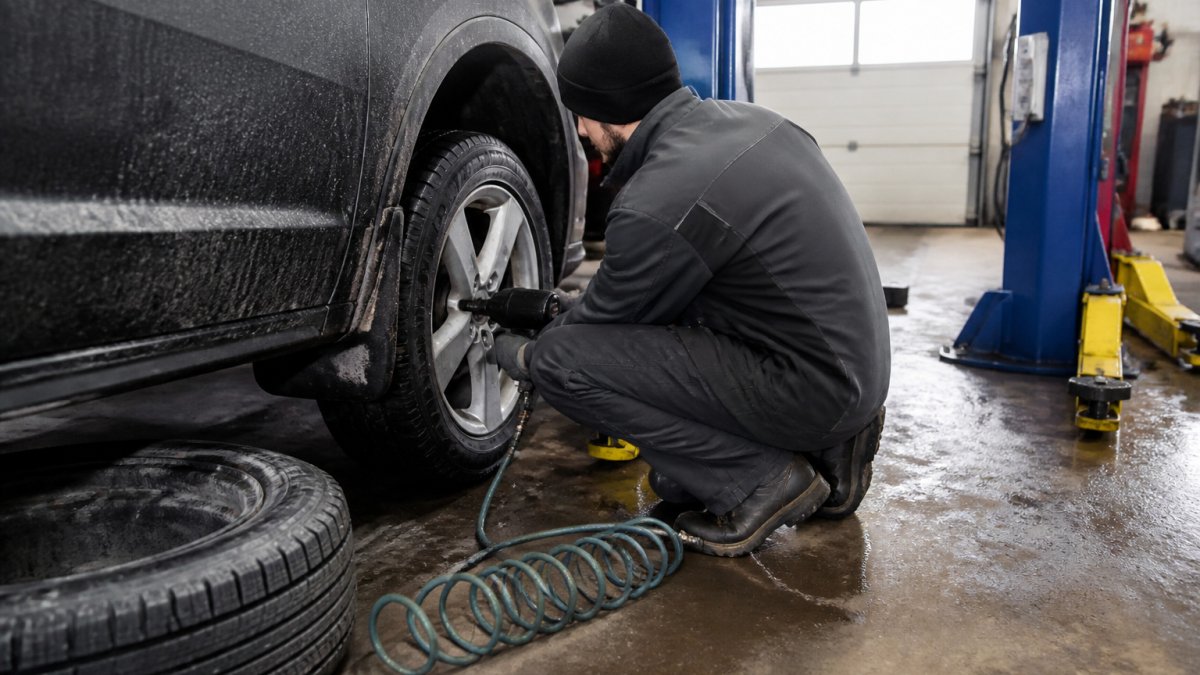
Watch out: a machine that starts easily warm but struggles cold can hide a compression or fuel-delivery problem, so insist on a cold start. Tires are the easiest item to overlook and the most expensive to replace, especially for a winter setup. If the machine needs new rubber, our tire sales and installation service covers ATV and automotive tires in one stop.
Your ATV Buying Checklist: Features, Paperwork, and Budget
An ATV buying checklist keeps the final decision grounded. Decide which features you will actually use: winch, plow mount, heated grips, cargo boxes, or a windshield. Every feature adds weight and cost, so buy for the riding you described in step one.
On paperwork, confirm the bill of sale, ownership documents, and any lien status on a used machine. Our showroom shopping guide explains what to expect in person.
Book a Showroom Visit and Test Sit at Orillia Power Sports Inc
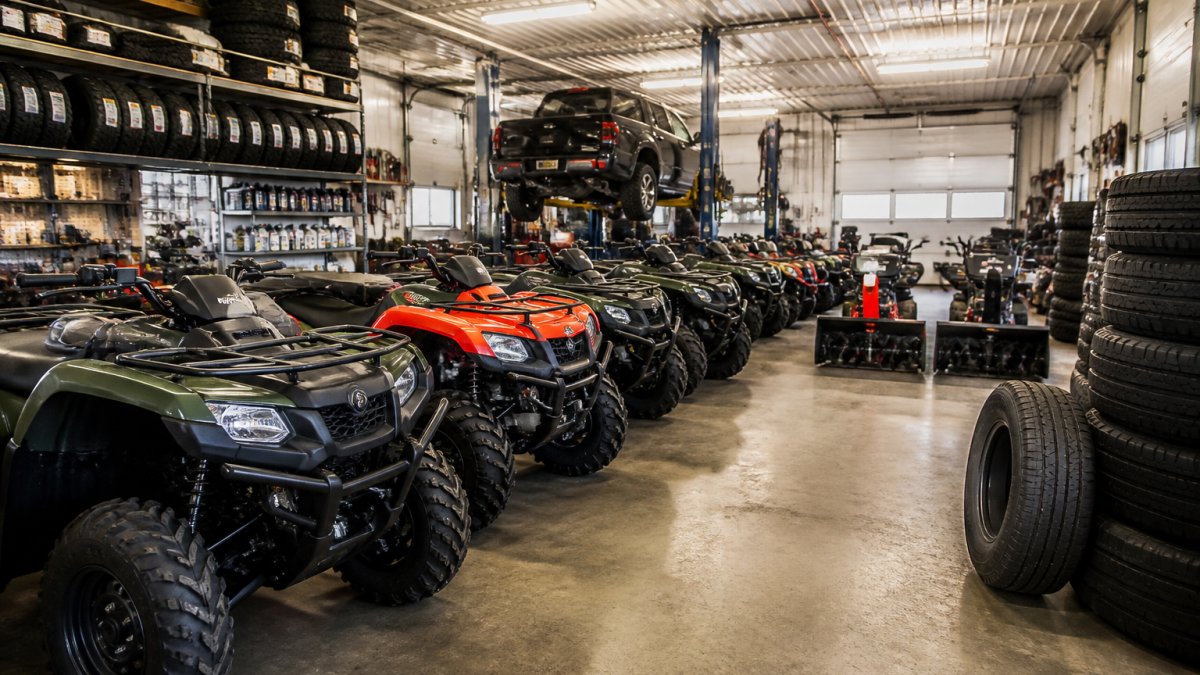
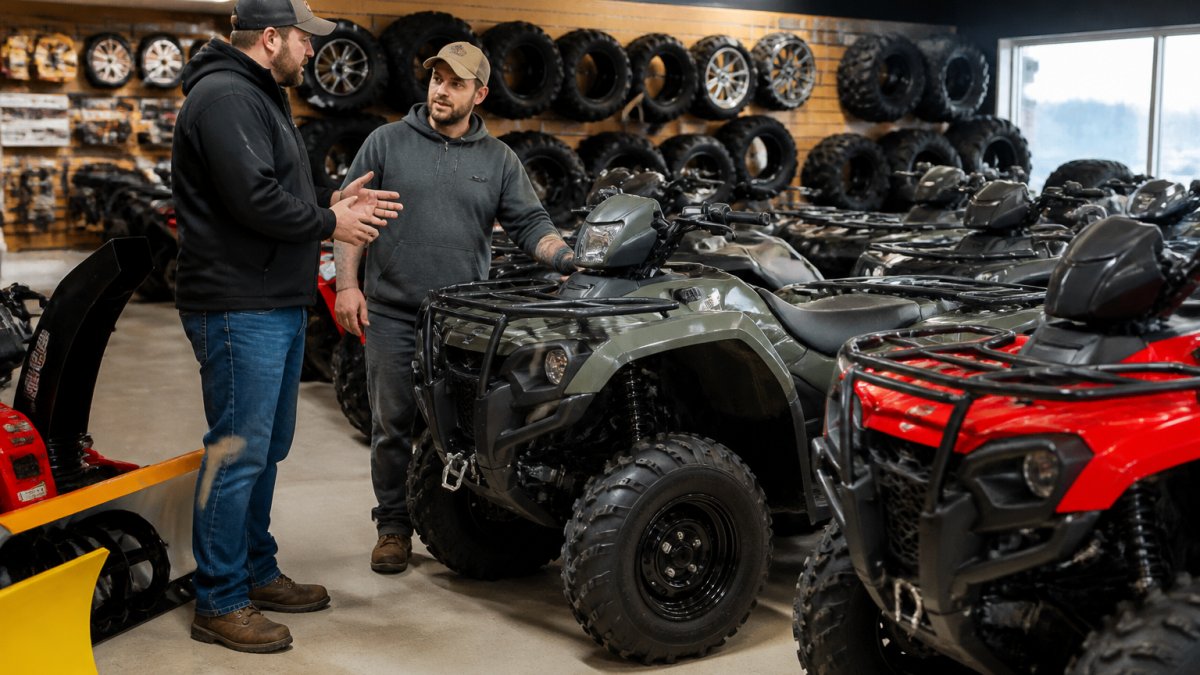
The final step in any ATV buying guide is the one no article can do for you: sit on the machine. A test sit confirms fit in minutes, and a conversation with our team confirms which models match your riding, experience, and budget.
Bring your questions about financing, plows, and winter tires. We would rather send you home with the right machine than the biggest one.
Frequently Asked Questions
What should I look for when buying an ATV?
Start with intended use: trail riding, farm work, and recreation call for different machines. Then match engine size and physical fit to the rider, decide between utility and sport categories, and set a budget that includes protective gear and maintenance. For used machines, work through an inspection checklist covering engine, drivetrain, frame, suspension, and tires. Confirm paperwork and ownership requirements before you pay, and take a test sit to check reach and comfort.
What size ATV is right for a beginner?
Beginners generally do best on a smaller-displacement machine that is easy to control. Youth riders need a model sized to their age and build, while adults new to riding should look at mid-size utility or recreational models rather than high-power sport quads. Use an ATV size guide that considers seat height, reach to the handlebars, and ground clearance alongside engine size. A test sit at a dealer is the fastest way to confirm fit before you buy.
Should I buy a new or used ATV?
New ATVs come with a warranty, known service history, and the latest safety features, but cost more upfront. Used ATVs cost less but carry risk: hidden wear, missing paperwork, or expensive repairs. A used ATV inspection checklist helps you judge condition before you commit. If you are not comfortable inspecting a machine yourself, buy from a dealer that services what it sells, or bring a mechanically inclined friend along.
What is the difference between a utility ATV and a sport ATV?
Utility ATVs prioritize towing capacity, payload capacity, ground clearance, and four-wheel drive for farm work and property maintenance. Sport ATVs prioritize power, suspension travel, and handling for trail riding and recreation. The utility ATV vs sport ATV decision usually comes down to whether you need to haul and tow or want speed and agility. Some riders choose a recreational model that sits between the two.
How do I inspect a used ATV before buying it?
Bring a used ATV inspection checklist and check the engine and drivetrain for leaks, unusual noise, and smooth shifting. Inspect the frame for cracks or welds, test the suspension for leaks and sag, and look at tire wear for uneven patterns. Check that lights, brakes, and four-wheel drive engage properly. Ask for service records and confirm the vehicle identification number matches the paperwork before you pay.
What documents should I get when buying an ATV?
Get a bill of sale with the make, model, year, vehicle identification number, and purchase price, plus the transfer of ownership documents required in your province. Ask for the owner's manual and any service records. If the ATV is used, confirm the seller's name matches the ownership and check for liens. Keep copies of everything for insurance and registration, and confirm local ownership rules before you ride.
How do I choose between a gas and electric ATV?
Gas ATVs suit long trail rides and utility work where range and refueling speed matter. Electric ATVs suit shorter trips, quieter riding, and lower maintenance, with battery range as the main limit. Consider where you will ride, how far, and whether you can charge at home. Electric models are popular for youth and recreational use, while gas remains the choice for heavy towing and remote terrain. Test ride both if you can.
Buying an ATV should feel exciting, not risky, and the difference comes down to preparation and a dealer who answers straight questions. At Orillia Power Sports Inc, we help you match a machine to your riding with a full lineup of ATVs and UTVs, in-person test sits, and a service shop that keeps everything running. Get started with Orillia Power Sports Inc and ride away on a machine that fits you.