 blog
Best Expert Auto Repair for Powersports Transport
Last Updated: October 23, 2026
Quick Summary
Expert auto repair for powersports transport means servicing the tow vehicle first, since a loaded trailer strains brakes, suspension, and tires. Choose a shop that services ATVs, UTVs, and trailers, explains its diagnostic process, and provides a written, itemized estimate before work begins.
- Ask which powersports makes and models a shop services regularly before booking.
- Photograph all four sides and the odometer before transport to document existing damage.
- Use four tie-down points and re-check straps after the first few kilometres.
- Book winter tire installation early because appointments fill fast after the first snowfall.
- Never clear a clogged snowblower chute by hand while the machine is running.
Table of Contents
- Why Expert Auto Repair Matters for Powersports Transport
- What to Look for in a Repair Shop for Powersports Vehicles
- ATV Repair and Maintenance: Keeping Your Machine Trail-Ready
- Powersports Vehicle Transport Preparation: A Step-by-Step Checklist
- Winter Tire Sales and Installation: Grip for Every Season
- Snowblower Maintenance: Get Ready for the Next Snowfall
- How to Compare Local Service Providers and Get Transparent Estimates
- Frequently Asked Questions
Why Expert Auto Repair Matters for Powersports Transport
Expert auto repair is the practice of diagnosing, servicing, and maintaining cars, trucks, and towing vehicles so they stay safe and reliable under load. A trailer carrying an ATV or side-by-side puts extra strain on brakes, suspension, and tires, and a breakdown on the way to the trail ruins the trip before it starts.
Here's what most guides get wrong. They treat powersports transport as a trailer problem. In practice, it's a tow-vehicle problem first. Worn brake pads that feel fine on a solo commute can fade badly with a loaded trailer behind you. Tired shocks that pass a quick bounce test can sag under tongue weight.
Below, we'll walk through what to look for in a shop, how to keep an ATV trail-ready, a transport prep checklist, winter tire priorities, snowblower upkeep, and how to compare local providers and get transparent estimates.
What to Look for in a Repair Shop for Powersports Vehicles
Most local listings tell you a shop exists and roughly where it sits.
Start with the questions that separate a general service bay from a shop that actually works on powersports and tow rigs.
1. Ask what powersports vehicles they service regularly.
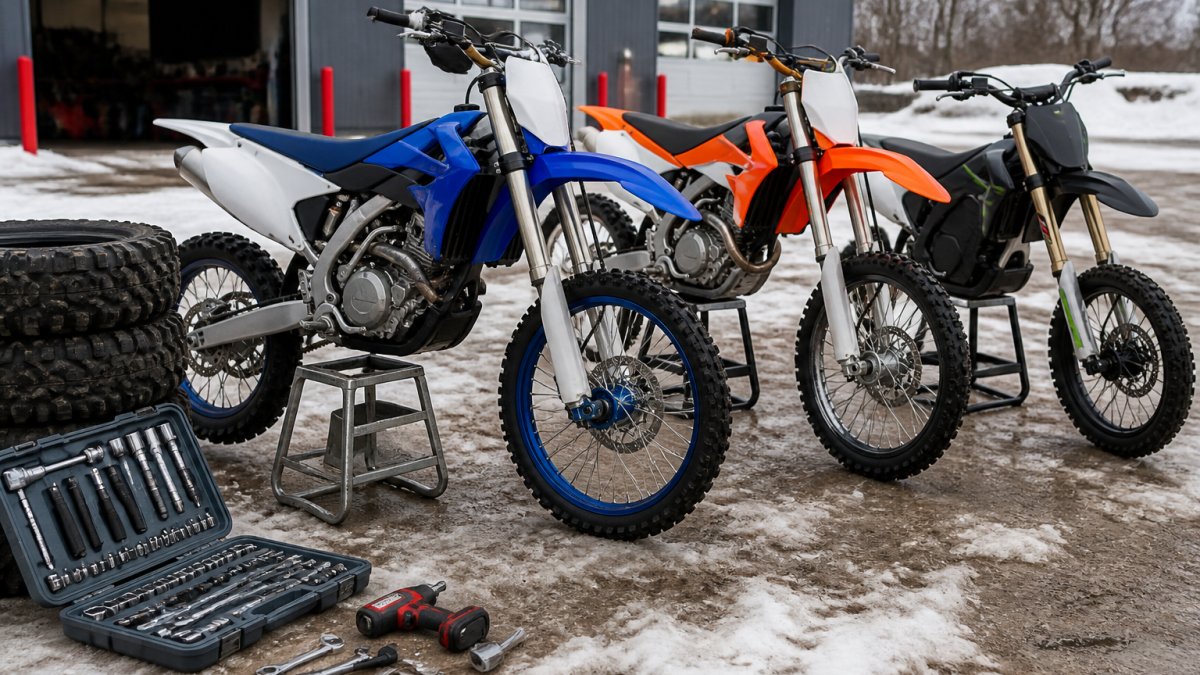
A shop that "can take a look" at an ATV is not the same as one that services ATVs, UTVs, dirt bikes, and snowmobiles as part of its normal week.
2. Ask about diagnostic equipment, not just tools.
Modern powersports machines and tow vehicles rely on electronic control units, sensors, and fuel injection.
3. Ask how they handle the tow vehicle and the trailer separately.
Powersports transport stresses the tow vehicle in ways a solo commute never does.
4. Ask for a sample written estimate.
A written estimate should itemize parts, labor, and any diagnostic fee separately.
5. Ask about turnaround and scheduling honestly.
Ask how they schedule work, how they communicate delays, and what happens when a job runs longer than expected.
6. Ask what they do when they find something unexpected.
Good shops call before adding work.
A few practical checks before you book:
- Confirm the vehicle type. A shop set up for commuter cars may not be equipped for a heavy-duty tow rig or a UTV.
- Ask about documented procedures. Reputable shops can describe how they test a repair, not just how they perform it.
- Request the estimate in writing. Verbal quotes invite surprises.
- Ask whether they service trailers. Trailer brakes, bearings, and lights are part of transport readiness and often overlooked.
ATV Repair and Maintenance: Keeping Your Machine Trail-Ready
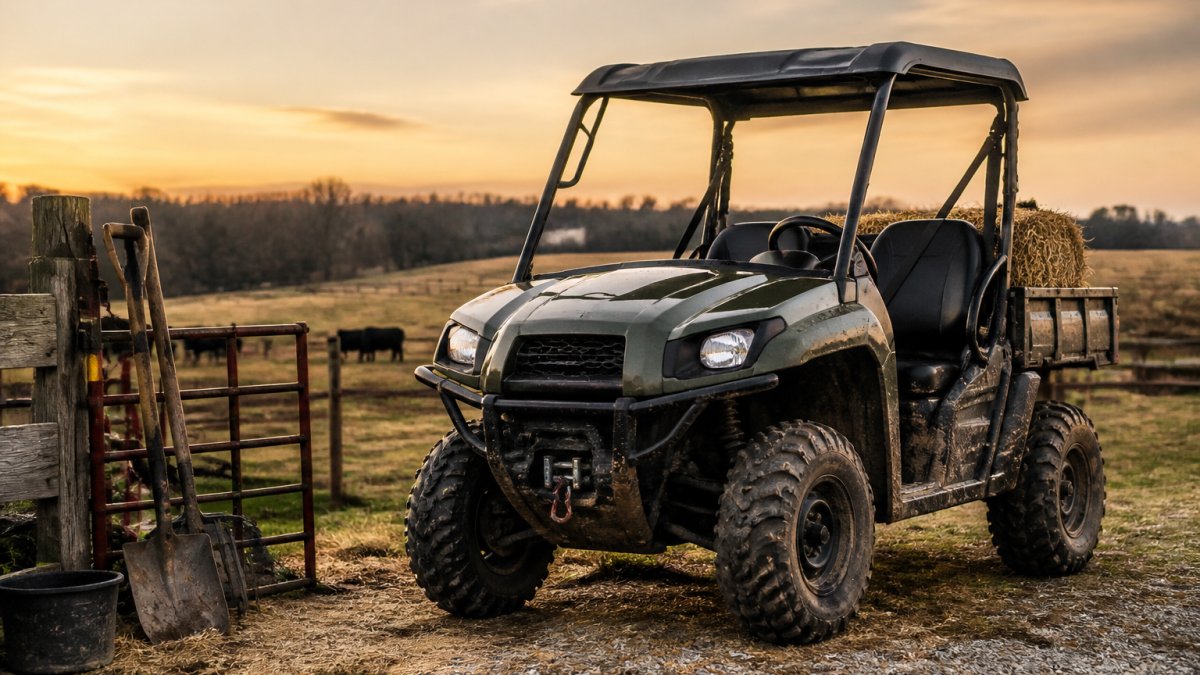
ATV repair and maintenance is the routine servicing and repair work that keeps an all-terrain vehicle reliable between rides. It covers fluids, belts, brakes, bearings, and suspension, plus a pre-season inspection before the trails open.
A common mistake riders make is storing a machine dirty and wet. Mud packs into bearings and seals, and moisture sits in places it shouldn't all winter. Clean and dry the machine before storage, and it will reward you in spring.
Work through this list before each season:
- Change engine oil and filter. Contaminated oil wears an engine faster than any other single factor.
- Inspect the belt or chain. Look for glazing, fraying, or slack.
- Check brake pads and fluid. Trail riding is hard on brakes, especially on descents.
- Grease fittings and check bearings. Listen for grinding or play in the wheels.
- Test the battery. Cold storage drains batteries; charge them periodically.
- Inspect tires for cuts and pressure. Trail damage often starts small.
- Check suspension for leaks and sag. Worn shocks change how the machine handles.
Electric models need their own routine: battery care, connector inspection, and brake checks. Gas models add air filter and spark plug attention.
Powersports Vehicle Transport Preparation: A Step-by-Step Checklist
Powersports vehicle transport preparation is the process of getting both the machine and the tow vehicle ready before a trip.
Start with the tow vehicle. Check tire pressure and tread, test the brakes under load if you can, and confirm the hitch and wiring are sound.
- Confirm hitch ball size matches the coupler and the pin is locked
- Check trailer tire pressure and inspect sidewalls for cracking
- Test all trailer lights: brake, turn, and running
- Cross the safety chains under the coupler
- Verify the machine's fuel level and secure any loose items
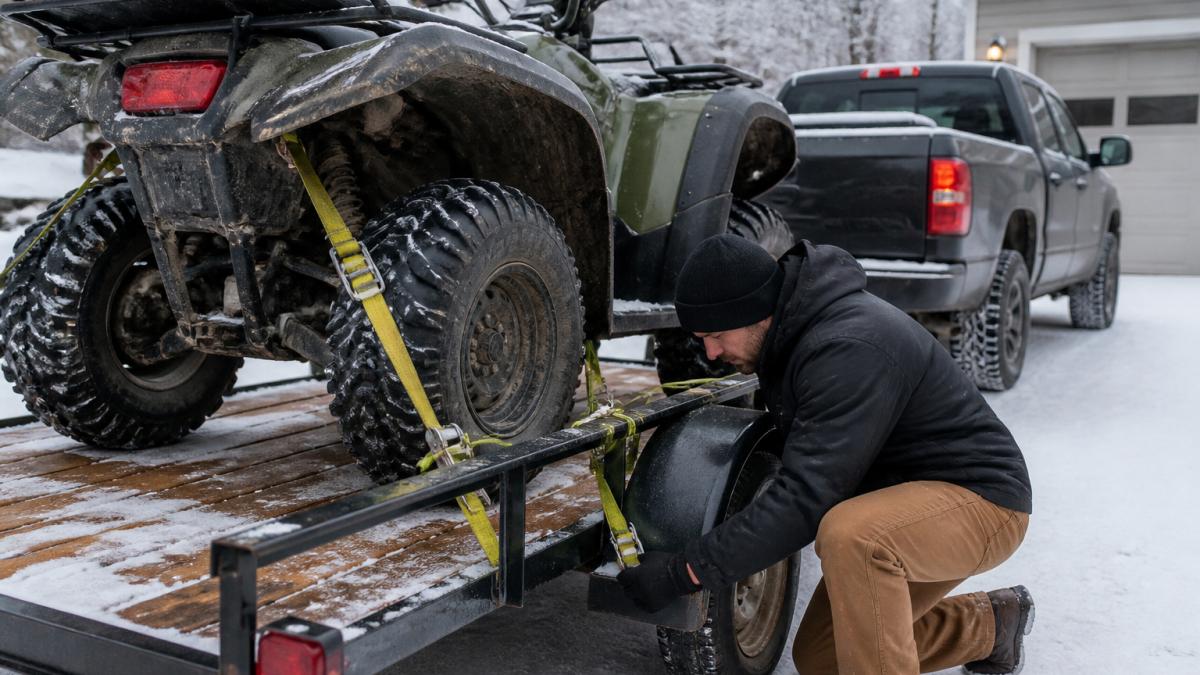
- Use four tie-down points, compressing the suspension evenly
- Re-check straps after the first few kilometres
- Carry a basic tool kit and a spare strap
Pre-transport inspection and documentation
Before the machine leaves the driveway, walk around it and photograph all four sides, the odometer or hour meter, and any existing damage. Note scratches, cracked plastics, or bent components in writing. This takes two minutes and gives you a record if a strap rubs or a panel cracks in transit. If a shop is preparing the machine, ask them to include condition notes with the service record.
Securing loose parts and fluids
Remove or secure anything that can shift: helmets, ramps, fuel cans, and loose tools.
Battery and electrical considerations
Cold storage and long transport drain batteries. Charge the battery before loading, and disconnect it if the trip is long or the machine will sit afterward.
Coordinating with the repair shop and transporter
If a shop is preparing the machine for transport, ask for a written summary of what was done and what to watch.
Inspection at pickup and delivery
At pickup, photograph the loaded machine and the hitch connection. At delivery, inspect the same points before signing anything. Look for strap rub marks, cracked panels, and fluid leaks.
Winter Tire Sales and Installation: Grip for Every Season
Winter tires are the highest-value safety purchase most drivers make, and they matter even more when you're towing. Cold-weather rubber stays flexible when all-seasons harden, which shortens stopping distance on cold, wet, and snowy pavement.
A common mistake is treating winter tires as optional for trucks. A loaded trailer amplifies every weakness in the tow vehicle, and braking is where it shows first.
What to prioritize:
- Four tires, not two. Mixing winter and all-season tires creates uneven grip and unpredictable handling.
- Check tread depth before the season starts. Worn winter tires lose their advantage quickly.
- Book installation early. The first snowfall brings a rush, and appointments fill fast.
- Store your off-season set properly. Clean, dry, and out of direct sunlight.
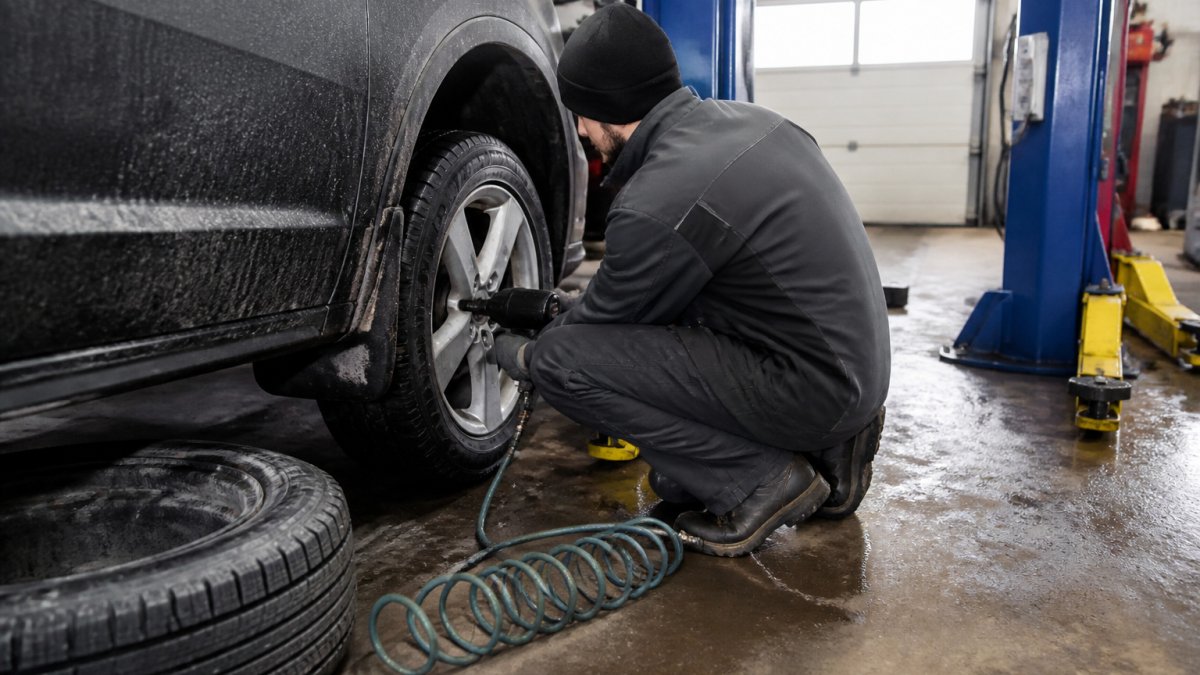
Installation should include a torque check and a pressure set to the vehicle's specification. Ask for both.
Snowblower Maintenance: Get Ready for the Next Snowfall
Snowblower maintenance is the pre-season servicing that keeps a machine starting and throwing snow when you need it most. Most failures happen on the first heavy snowfall, usually because the machine sat untouched since spring.
Drain old fuel or add stabilizer before storage, and start the season with fresh fuel. Inspect the auger and impeller for damage, check belts for wear, and lubricate the chute and controls. Change the spark plug and check the oil on four-stroke models. For electric start models, test the battery and charging system.
Clear the machine before storage, not after. Compacted snow and ice left in the auger housing cause corrosion and seized parts.
How to Compare Local Service Providers and Get Transparent Estimates
Compare providers on four criteria: written estimates, turnaround commitments, technician qualifications, and how clearly they explain the work. Price matters, but the cheapest quote is rarely the best value once you account for rework.
Ask each shop the same questions and note the answers side by side.
| Criteria | What to Ask | What a Good Answer Looks Like |
|---|---|---|
| Estimate | Will you provide a written estimate before work? | Yes, itemized, with approval required for changes |
| Turnaround | How do you schedule and communicate delays? | Clear timeline, call before adding work |
| Qualifications | How do technicians stay current? | Specific training and certification details |
| Scope | Do you service tow vehicles and powersports? | Direct experience with both |
| Diagnostics | What diagnostic process do you use? | Explained clearly, not guessed |
Get estimates in writing and compare line by line, not just the total. Ask what happens if the diagnosis changes mid-job. A shop that explains this upfront is usually the one that won't surprise you later.
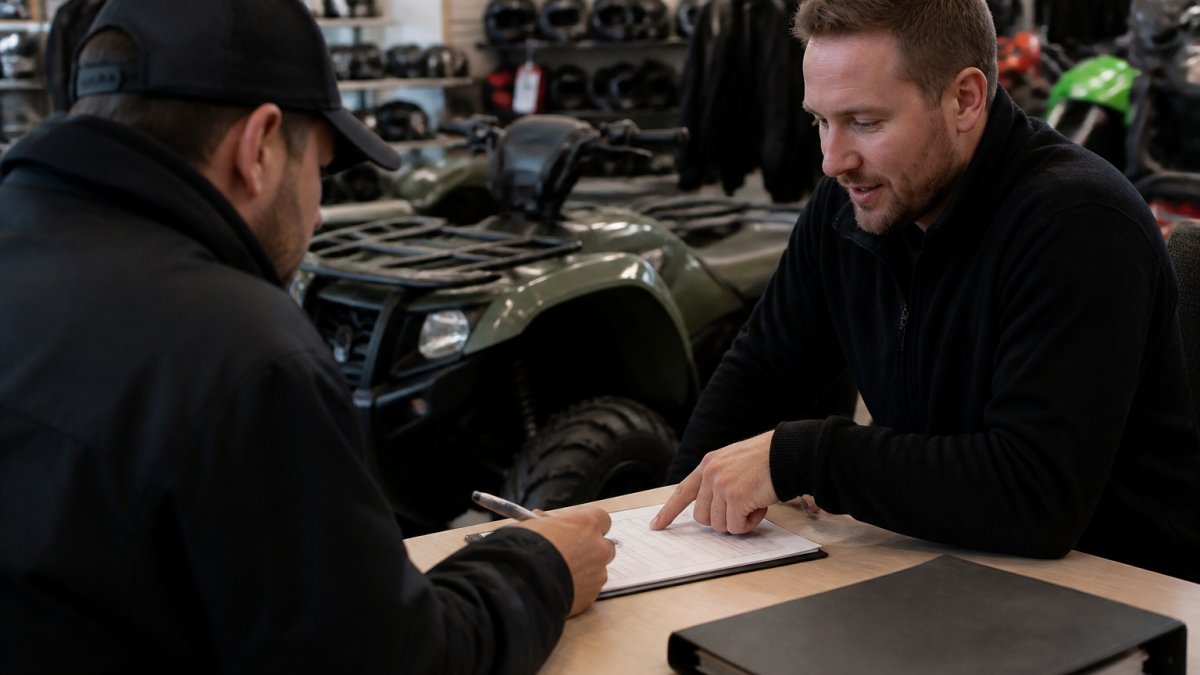
Our team at Orillia Power Sports Inc handles automotive repair for cars and trucks, including tires, brakes, and suspension, alongside ATV, UTV, and dirt bike sales and service. That combination means one conversation covers the machine and the vehicle that hauls it.
Frequently Asked Questions
How often should an ATV be serviced?
Follow the owner's manual for the exact interval, but a practical rule is to service your ATV before and after every heavy riding season. That includes changing engine oil, checking the air filter, inspecting brakes and suspension, and greasing fittings. If you ride in mud, snow, or dusty trails, shorten the interval. A reputable shop can set a maintenance schedule based on your model and how you ride, so you are not guessing.
What maintenance should I do before transporting an ATV?
Check tire pressure and look for cracks or embedded debris. Test the brakes and make sure the parking brake holds. Confirm the battery is secure and the fuel cap is tight. Clean off mud and snow so straps and tie-down points work properly. Inspect the tie-down locations on the frame, not the plastic bodywork. If anything feels loose or worn, book a pre-transport inspection at a qualified repair shop before you load up.
Can an automotive repair shop service ATVs and other powersports vehicles?
Some full-service automotive shops also handle powersports vehicles, but not all do. Ask directly whether they work on ATVs, UTVs, and dirt bikes, and whether their technicians have specific training for those machines. A shop that sells powersports vehicles often has the tools and experience for both automotive and powersports repair. Get a clear answer before booking, and ask for examples of similar jobs they have completed.
When should I install winter tires?
Install winter tires when temperatures consistently drop below 7°C, because the rubber compound in all-season tires hardens and loses grip at that point. In many regions that means late October to mid-November. Book your winter tire sales and installation appointment early, since shops fill up fast before the first snowfall. Waiting until the first storm risks a long wait and driving on tires that are not suited to the conditions.
Powersports season only works when the tow vehicle and the machine are both ready, and that takes planning before the first trip. Orillia Power Sports Inc offers expert automotive repair and maintenance for cars and trucks, including tire sales and installation, brake and suspension work, plus ATV and UTV service under one roof. Get started with Orillia Power Sports Inc and head out with a rig you can trust.