 comparison
Go Karts and Dune Buggies: A 2026 Buyer's Guide
Table of Contents
- Go-Karts and Dune Buggies: What's the Difference?
- Go-Kart vs Dune Buggy: A Side-by-Side Comparison
- Choosing an Off-Road Go-Kart for Your Terrain
- Essential Go-Kart Safety Gear
- Dune Buggy Maintenance: Keeping Your Ride Trail-Ready
- What to Know Before You Buy
- Conclusion
- Frequently Asked Questions
Last Updated: October 17, 2026
Go-Karts and Dune Buggies: What's the Difference?
Go karts and dune buggies look like cousins, but they're built for completely different jobs. A go-kart is a low, light, four-wheeled machine designed for smooth, closed-course driving. A dune buggy is a taller, long-travel off-road vehicle built to absorb sand, rocks, and ruts without shaking itself apart.
Here's the short version most guides skip: buying the wrong one for your terrain is the single most common mistake. A track kart on a sandy trail bogs down and overheats. A dune buggy on a paved track feels top-heavy and clumsy. Match the machine to the ground before you fall in love with a paint color.
At Orillia Power Sports Inc, we help riders sort through that decision, and the answer almost always comes down to where you'll actually ride.
Go-Karts: Track-Focused Fun
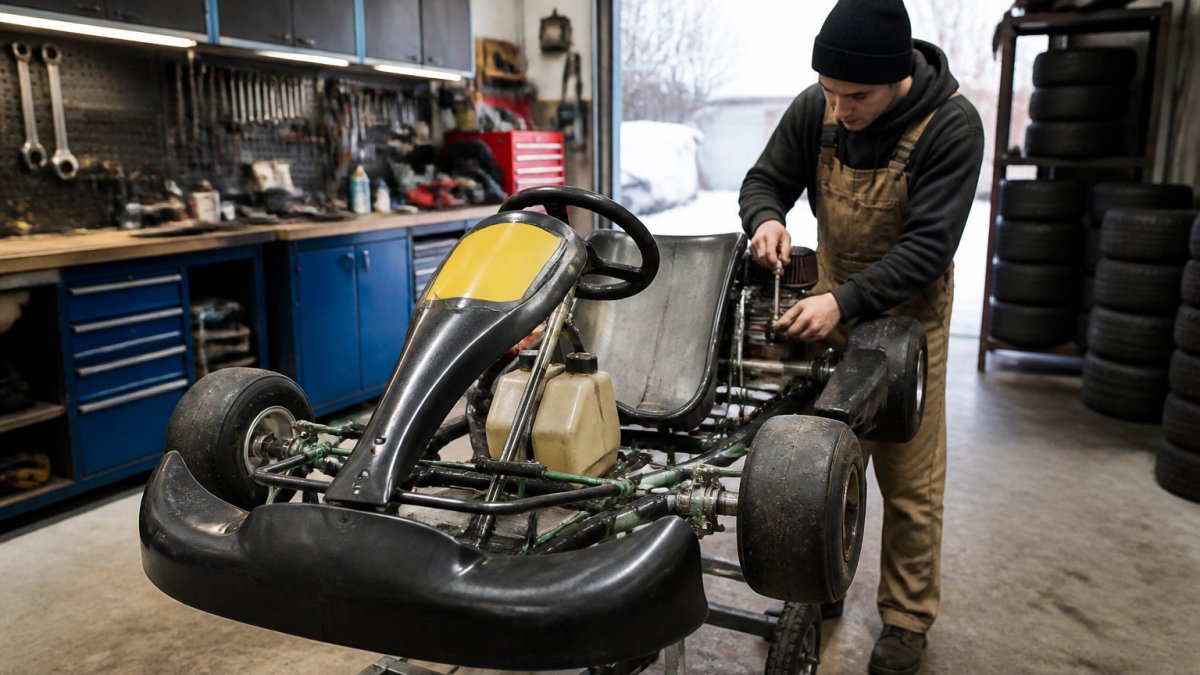
A go-kart is a small, low-slung vehicle with a stiff chassis and limited suspension travel, tuned for flat, predictable surfaces. Think paved circuits, packed dirt ovals, and smooth gravel lanes. Most go-karts use a simple live-axle rear end, a low center of gravity, and a seat mounted close to the floor. That design keeps the kart planted in corners and makes it feel quick even with modest power.
Track karts shine because they're simple. Fewer moving parts means less to break and easier maintenance. The trade-off is a stiff ride: a go-kart transmits every bump straight to the driver's spine, which is why long off-road sessions in a track kart wear you out fast.
Dune Buggies: Built for the Sand
A dune buggy is an off-road vehicle with long-travel suspension, larger tires, and higher ground clearance, engineered for loose terrain like sand, dunes, and rocky trails. That suspension soaks up ruts and whoops that would rattle a kart to pieces. Bigger tires float over soft ground instead of digging in.
The extra height and travel cost you something on pavement. Dune buggies feel tippier in tight corners and carry more weight, so they accelerate less sharply than a light kart. On sand, though, there's no contest. This is the machine that keeps moving when the ground turns soft.
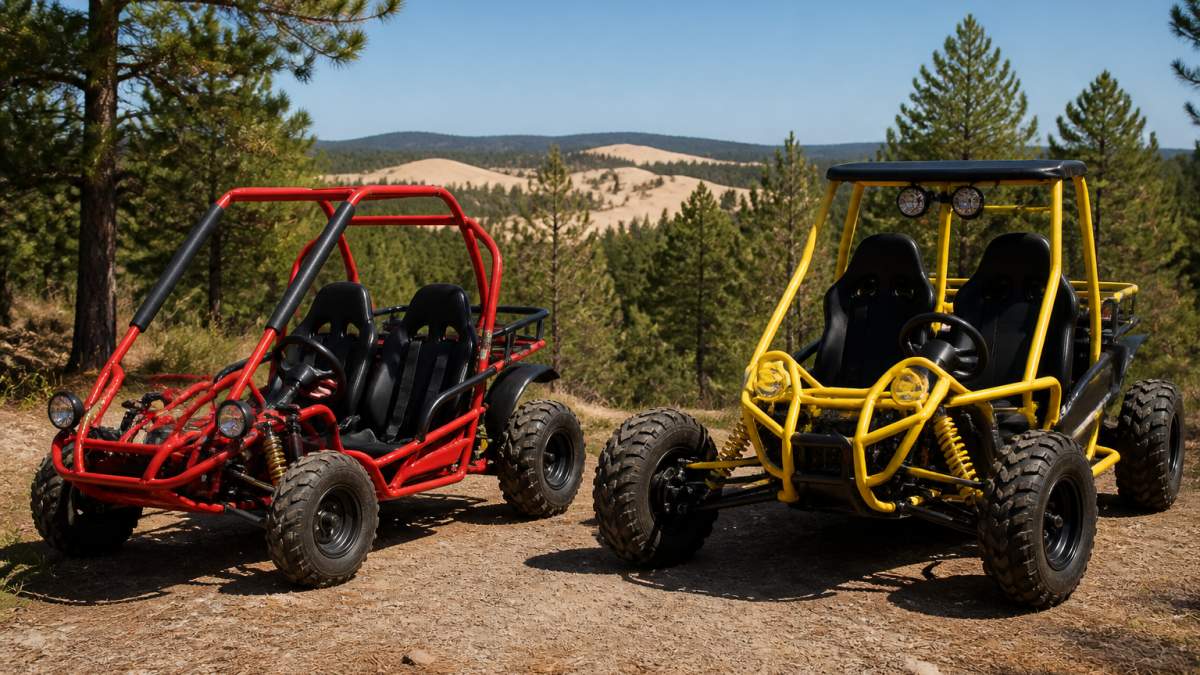
Go-Kart vs Dune Buggy: A Side-by-Side Comparison
The fastest way to choose is to line the two up against the specs that actually matter. Most listings show a photo and a price; what they skip is how the numbers translate to where you ride. Here's how a go-kart and a dune buggy compare across the categories buyers ask about most.
| Feature | Go-Kart | Dune Buggy |
|---|---|---|
| Best terrain | Paved track, packed dirt | Sand, dunes, rocky trail |
| Suspension travel | Minimal (often none at the rear) | Long-travel, typically several inches at each corner |
| Ground clearance | Low, often under 6 inches | High, commonly 10 inches or more |
| Typical engine | Small gas four-stroke, often under 200 cc | Larger gas four-stroke, often 250 cc and up |
| Drivetrain | Live axle, chain or belt drive | Live axle or independent rear, chain or belt drive |
| Brakes | Mechanical or hydraulic disc | Hydraulic disc, sometimes four-wheel |
| Tires | Small, hard-compound, low-profile | Large, knobby or paddle, soft-compound |
| Top priority | Cornering and speed | Durability and comfort |
| Maintenance focus | Chain, tires, brakes | Shocks, bearings, tires, air filter |
Engine and Power
Gasoline four-stroke engines dominate both categories because they're reliable, easy to refuel, and simple to service. Engine size scales with the machine's job: smaller displacements suit light youth karts, while larger engines push heavier buggies through sand. Horsepower matters less than gearing and weight. A light kart with a modest engine often feels quicker than a heavy buggy with more power. When comparing models, look at displacement, claimed power, and curb weight together rather than any single figure.
Terrain and Suspension
Suspension is the real dividing line. A go-kart's stiff setup keeps it flat and fast on smooth ground. A dune buggy's long travel and bigger tires let it crawl over obstacles and float across sand. If your riding happens on trails, dunes, or uneven ground, the buggy's suspension isn't a luxury, it's the whole point. Ground clearance and tire type follow the same logic: more clearance and a more aggressive tread open up rougher terrain, while a low, hard-tired kart is happiest on smooth surfaces.
Safety and Licensing
Both vehicle types reward the same basics: a helmet, eye protection, and a machine sized to the rider. Youth riders should always be matched to age-appropriate models with governed speed. For public-road use, check your provincial rules before you ride, since off-road vehicles face different requirements depending on where you are. When in doubt, confirm with your local authority rather than assume.
Tires: The Spec That Changes Everything
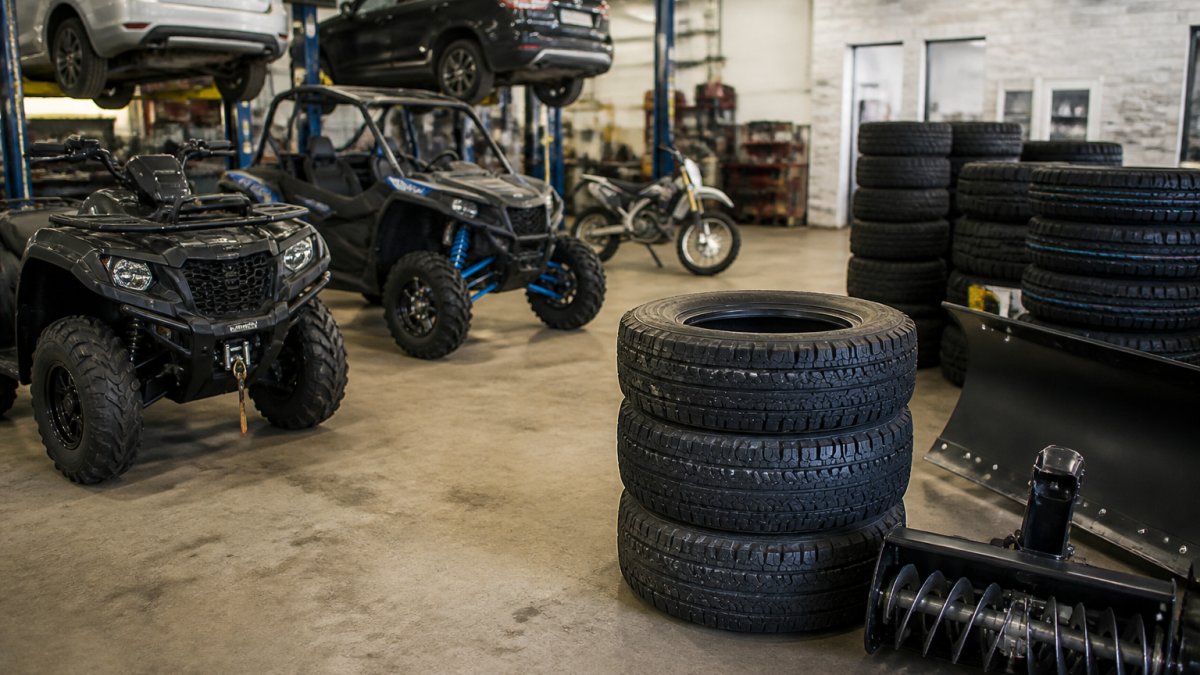
Tires are where the go-kart and dune-buggy split becomes most obvious, and they're the first thing to sort out before a season starts. A kart runs small, hard-compound tires that prioritize grip and low rolling resistance on smooth ground. A buggy runs larger, softer tires with deeper tread or paddle patterns that float over sand and bite into loose trail. The trade-off is wear: soft off-road tires wear faster on hardpack, and hard kart tires offer little flotation in sand. If you're prepping either machine for winter storage or a spring refresh, a tire inspection and replacement plan belongs at the top of the list, and a shop that handles tire sales and installation can mount the right set without you guessing at sizes.
Choosing an Off-Road Go-Kart for Your Terrain
An off-road go-kart sits between the two extremes: more suspension and clearance than a track kart, but lighter and more agile than a full dune buggy. It's the right pick if you split your time between packed trails and the occasional rough patch.
Match the machine to the ground:
- Packed dirt and gravel: a stiff kart or light off-road model works well.
- Sand and dunes: step up to a buggy with long-travel suspension.
- Rocky trails: prioritize ground clearance and tire tread.
- Mixed family use: choose adjustable seats and governed speed for younger riders.
A common mistake is buying for the terrain you wish you had. Buy for where the machine will actually spend its weekends.
Essential Go-Kart Safety Gear
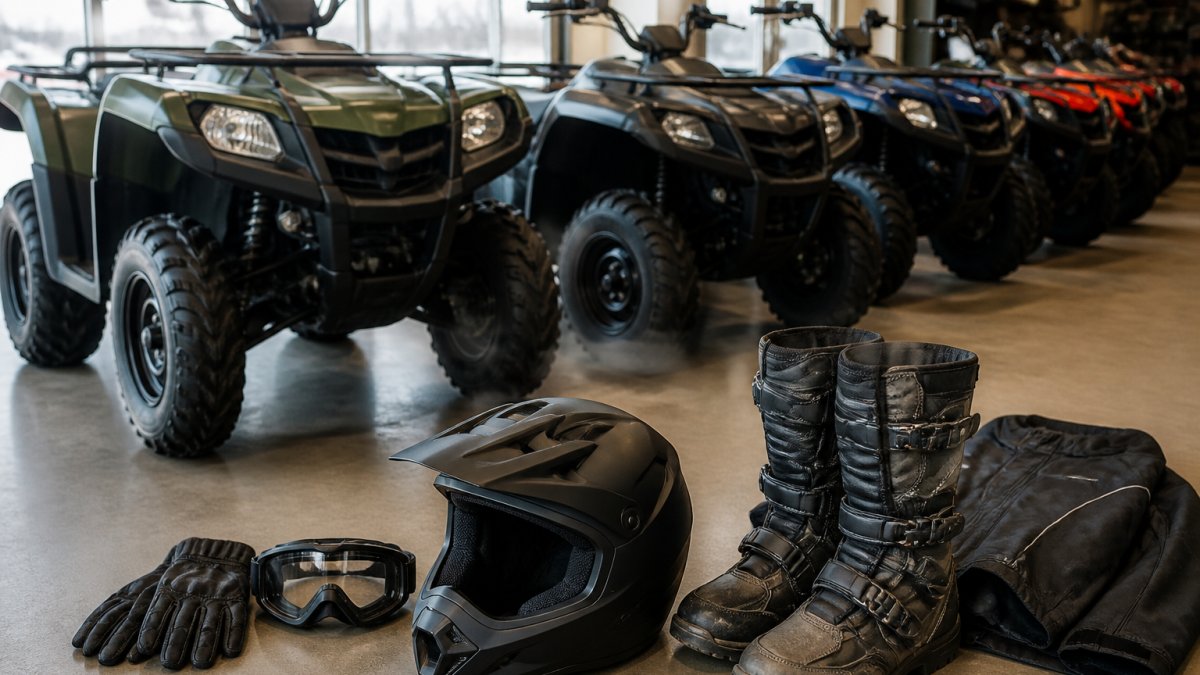
Safety gear isn't optional equipment, it's part of the vehicle. A proper helmet is the first purchase, followed by eye protection against dust and debris. Gloves improve grip and protect your hands, and closed-toe footwear keeps feet secure on the pedals. For faster machines, add a chest protector and consider a neck brace.
Fit matters more than price, especially for youth riders. A helmet that's too large slides on impact, so size it correctly and replace it after any hard knock. The same logic applies to the machine: a kart that's too big or too powerful for the rider is a safety problem no amount of gear can fix. Match the model to the rider's size, experience, and the terrain they'll actually use, and use governed speed settings for younger or newer drivers.
Supervision is the other half of the equation. Youth riders should be watched by an adult who knows the machine's controls and limits, and riding areas should be clear of obstacles, other vehicles, and bystanders. Set rules before the engine starts: helmets on, seat belts or harnesses fastened where fitted, and no riding after dark without lights.
Always run a pre-ride check on brakes, tires, and steering before anyone climbs in. Tires deserve special attention because they're the only contact with the ground, check pressure, tread wear, and for cuts or embedded debris, and replace any tire that's damaged or worn past its limit. A shop that handles tire sales and installation can inspect and refresh a set before the season starts, which is far cheaper than a failure mid-ride.
Dune Buggy Maintenance: Keeping Your Ride Trail-Ready
Dune buggy maintenance comes down to a short, repeatable routine. Sand and grit work their way into everything, so frequent cleaning and inspection keep a buggy trail-ready far longer than occasional big repairs.
Focus on these areas:
- Air filter: clean or replace often, since dust is the engine's worst enemy.
- Suspension and shocks: check for leaks and worn bushings after rough rides.
- Tires and bearings: inspect for wear and repack or replace as needed.
- Chain or drive components: clean and lubricate regularly.
- Brakes: test before every outing and service at the first sign of fade.
If a job is beyond your tools, a full-service shop can handle suspension work, brakes, and tires without you hauling the machine yourself.
What to Know Before You Buy
Budget for more than the sticker. The purchase price is only the start, and the smartest buyers plan for the costs that follow.
New vs. Used
New machines come with warranty coverage and no hidden wear, which matters most for first-time buyers and youth riders. Used machines cost less up front but demand a careful inspection of the frame, suspension, and engine. Bring someone who knows these vehicles, or buy from a shop that stands behind what it sells.
Ownership Costs
Beyond purchase, plan for safety gear, fuel, tires, and routine maintenance. Off-road tires wear faster on hard ground, and suspension components take a beating on rough trails. Factor in storage and transport too. Pricing on any specific model depends on configuration and availability, so check with us for current figures rather than guessing.
Conclusion
Choosing between go karts and dune buggies gets a lot easier once you start with your terrain instead of the spec sheet. Track-focused riders want a kart. Sand and trail riders want a buggy. Everyone else wants a machine that matches how they actually ride.
At Orillia Power Sports Inc, we carry a full lineup of ATVs, UTVs, and dirt bikes for all ages, backed by a full automotive repair shop for tires, brakes, and suspension work. Stop in to compare models in person, or let our team help you match the right machine to your terrain and budget. Get started with Orillia Power Sports Inc and ride with confidence this season.
Frequently Asked Questions
What is the difference between a go-kart and a dune buggy?
Go-karts are low-slung, four-wheeled vehicles often used on paved or smooth tracks, while dune buggies are designed for off-road terrain like sand dunes and trails. Dune buggies typically have larger tires, higher ground clearance, and more powerful engines. Go-karts focus on agility and racing, whereas dune buggies prioritize durability and off-road capability. Your choice depends on where you plan to ride and your experience level.
Can go-karts be driven off-road?
Most standard go-karts are not built for off-road use; their small tires and low clearance can get stuck on rough terrain. However, off-road go-kart models exist with knobby tires, upgraded suspension, and higher clearance. These can handle light trails and dirt paths but are not as capable as dune buggies on deep sand or extreme terrain. Always check the manufacturer's specifications for off-road suitability.
What safety gear should you wear in a go-kart or dune buggy?
Essential go-kart safety gear includes a DOT-approved helmet, goggles or a face shield, gloves, long pants, and closed-toe shoes. A five-point harness is recommended for both. Never ride without a helmet, and ensure all gear fits properly. Safety gear should be replaced after any significant impact.
Are dune buggies suitable for beginners?
Dune buggies can be suitable for beginners if you choose a model with moderate power and take a safety course. Practice on easy trails before tackling steep dunes. Always ride with an experienced buddy and wear full safety gear. Many off-road parks offer introductory lessons. Avoid high-performance models until you've built confidence and skills.